
Tech
Low efficiency in small-batch production Smart manufacturing and automation solutions help you cut costs by 30%.

Introduction
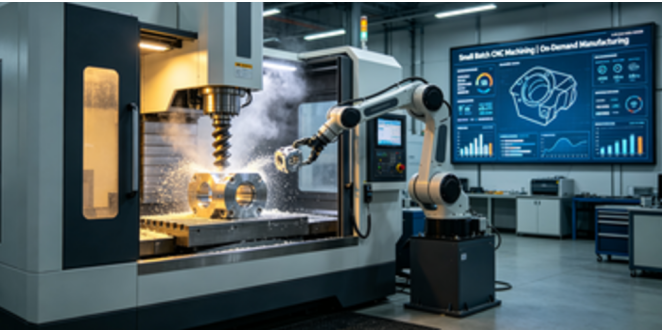
In product development and market testing, small-batch orders often face high costs and long lead times. Traditional mold-based manufacturing cannot flexibly respond to changing design requirements, causing many innovative ideas to stall due to expensive trial-and-error. The core bottleneck lies in capital-intensive, long-cycle predictive planning that forces upfront investment in tooling and inventory risk. This article explores how combining smart manufacturing and automation with Small Batch CNC Machining builds an efficient, flexible on-demand manufacturing system to fundamentally solve these challenges. Below, five key dimensions unpack this disruptive strategy.
Why Is Small Batch CNC Machining the Foundation of Agile Manufacturing?
Small Batch CNC Machining revolutionizes traditional supply chain management through digital, tool-free production. It shifts manufacturing from capital-intensive, long-cycle forecasting to asset-light, fast-response On-Demand Manufacturing. Unlike conventional mold-making, which demands high upfront costs and lengthy preparation, Low Volume CNC Machining dramatically lowers innovation barriers and trial costs, enabling rapid iteration and market validation. By eliminating inventory pressure, it establishes a flexible supply system capable of adapting to fluctuating demand.
For practical implementation, explore small batch cnc machining services that embody these principles. Companies leveraging this approach can test multiple design variants simultaneously, reducing time-to-market by up to 60% compared to traditional methods. The agility gained allows startups and established firms alike to pivot quickly based on customer feedback, turning design changes into production-ready parts within days rather than months. This digital-first model empowers engineers to refine prototypes iteratively, accelerating product development cycles and fostering continuous innovation.
How to Choose the Right CNC Machining Process to Optimize Small-Batch Project Costs?
A practical framework for How to Choose CNC Machining Services focuses on key cost drivers: material hardness, geometric complexity, and tolerance requirements. Different CNC Machining Process options—such as milling, turning, and multi-axis machining—offer varying cost-effectiveness. For small-batch parts with complex features, highly integrated mill-turn centers often achieve the best economy.
Practical tips include optimizing tool paths, standardizing hole sizes, and adjusting fillet radii to control costs without compromising function. Additionally, selecting softer materials like aluminum 6061 instead of stainless steel can reduce cycle time by 30%, while also extending tool life. Engineers should also consider using near-net-shape blanks to minimize material waste and reduce machining passes. Grouping similar features into a single setup further cuts programming and changeover time. By applying these strategies, companies can cut per-part costs by 15-25% while maintaining precision, making small-batch projects economically viable without sacrificing quality or turnaround speed.
How Do Automation Solutions Enable Rapid Response in Small-Batch CNC Machining?
Automation Solutions play a critical role in shortening delivery cycles. Consider a medical device startup that urgently needed 50 functional prototypes. Using professional Prototype CNC Machining capabilities and automated scheduling, the supplier completed the order in days instead of weeks. Digital-driven production planning compressed supply chain response time to hours, flexibly meeting urgent market demands.
Automation here extends beyond machinery to intelligent coordination of quoting, DFM analysis, and production scheduling. Real-time machine monitoring and adaptive toolpath adjustments further enhance efficiency, reducing idle time and minimizing errors. In one case, a robotics company reduced its prototype lead time from 21 days to just 5 days by partnering with an automated CNC service provider, allowing them to secure a crucial funding round ahead of competitors. This level of responsiveness transforms how businesses approach product launches, enabling them to validate designs rapidly and capture market opportunities with confidence.
How to Build a Reliable Quality Assurance System in Small-Batch Production?
Three-Tier QA System for Small Batches
l First-Article Inspection & In-Process Monitoring
Even small batches deserve the same quality standards as mass production. A three-tier QA system—first-article inspection, in-process monitoring, and full digital traceability—ensures consistency. Advanced tools like CMMs and optical measuring instruments verify dimensions and material properties. Certifications such as ISO 9001 and IATF 16949 demonstrate capability in high-standard industries. For example, automotive machining services rely on this rigorous framework to meet strict industry requirements.
l Full Digital Traceability
Each part receives a unique QR code linking to its inspection report, enabling full traceability from raw material to final shipment. Statistical process control (SPC) charts track variation in real time, flagging any deviation before it becomes a defect. This system ensures that even a 10-piece order meets the same reliability as a 10,000-piece run.
Enhanced Verification and Client Trust
Material certifications are cross-checked against incoming stock, and surface finish measurements are digitally archived for future reference. For critical applications, additional non-destructive testing can be integrated seamlessly. Such comprehensive quality assurance builds trust with clients who cannot tolerate failures in prototypes or low-volume production.
How to Maximize ROI by Partnering with a Professional CNC Machining Service Provider?
Strategic Value of a CNC Partner
l Engineering Extension & DFM Analysis
Choosing a CNC Machining Services partner goes beyond buying parts. A good partner acts as an extension of the engineering team, offering front-end DFM analysis and material substitution advice to optimize costs during design.
l Cost Reduction Through Design Collaboration
By identifying potential manufacturing issues early, the partner helps avoid expensive rework and accelerates the path to production. This collaborative approach ensures that every design decision contributes to both functionality and affordability.
Smart Manufacturing Ecosystem in Action
LS Manufacturing exemplifies this by integrating Smart Manufacturing ecosystems—using IoT and real-time data hubs to provide full visibility and traceability from order to delivery. The goal is to turn manufacturing expenses into maximum value, gaining a competitive edge beyond the parts themselves. Their platform offers instant quoting, automated DFM feedback, and live production status updates. Clients report an average 20% reduction in total project cost when leveraging these advanced capabilities, along with faster time-to-market for new products.
Summary
Integrating smart manufacturing and automation into small-batch CNC machining effectively solves the high-cost, long-lead-time dilemma of traditional production. It not only enables “dare to try, quick to iterate” in product development but also builds agile, resilient supply chains, transforming risky manufacturing investments into controllable strategic assets.
Upload your 3D drawings now to experience professional, efficient on-demand manufacturing. Get instant quotes and reliable scheduling, turning your innovative ideas into high-quality products.
Author Bio
This article was written by a senior manufacturing engineer at LS Manufacturing, an industry leader with over 20 years of experience providing high-precision CNC machining, sheet metal fabrication, and injection molding solutions globally.
FAQs
Q1: What is small batch CNC machining?
A: It is a digital, tool-free manufacturing method suitable for 10 to hundreds of parts. By directly reading 3D drawings, it significantly reduces costs and lead times for small batches.
Q2: Why does small batch CNC machining cost more per part than mass production?
A: Fixed costs like programming and setup are spread over fewer units, raising unit price. However, total investment and risk are much lower than mold-based production, ideal for R&D and pilot runs.
Q3: What is typical lead time for small batch CNC machining?
A: Standard orders take 5–10 business days from file confirmation to shipment, depending on complexity and capacity. Expedited services are available for urgent needs.
Q4: Can small batch orders still guarantee high quality?
A: Yes. Professional service providers apply the same quality standards as mass production, including first-article inspection, in-process monitoring, and full dimensional reports.
Q5: How do I start my first small batch CNC machining project?
A: Simply prepare your CAD files (e.g., STEP, STL) and submit them to a service provider. They will offer free DFM analysis and a detailed quote; production begins after approval.

Understanding AI Agent Architecture: From Automation to Autonomous Intelligence

How DMCA Ignored Hosting Help Adult Content Sites?

Other Alternatives to the Bigbunny Login Casino
Web UI Design Services, Custom Web App Development, or Local Product Design: Where to Start

Type-C to C vs Type A to Type C Cable: What’s the Difference?

How Executive Search Software Selects and Manages Senior Leadership Candidates

Data Science Course in Pune with Placement Support: From Classroom Training to Your First Job

Ethical Hacking Courses in Mumbai with Placement: Institutes, Duration, Fees & Jobs 2026

Best Micro Influencer Agency Singapore: Why Micro Beats Macro for Conversion

What Makes a Crypto Exchange Top-Rated? Understanding the Ranking Criteria
Web UI Design Services, Custom Web App Development, or Local Product Design: Where to Start
How Executive Search Software Selects and Manages Senior Leadership Candidates
Other Alternatives to the Bigbunny Login Casino
Type-C to C vs Type A to Type C Cable: What’s the Difference?
How DMCA Ignored Hosting Help Adult Content Sites?
Understanding AI Agent Architecture: From Automation to Autonomous Intelligence


 Tech2 years ago
How to Use a Temporary Number for WhatsApp
- Business3 years ago
Sepatuindonesia.com | Best Online Store in Indonesia
- Social Media2 years ago
The Best Methods to Download TikTok Videos Using SnapTik
- Technology2 years ago
Top High Paying Affiliate Programs
- Tech2 years ago
Understanding thejavasea.me Leaks Aio-TLP: A Comprehensive Guide
- FOOD2 years ago
How to Identify Pure Desi Ghee? Ultimate Guidelines for Purchasing Authentic Ghee Online

 Instagram4 years ago
Free Instagram Auto Follower Without Login
- Instagram4 years ago
Free Instagram Follower Without Login