
Tech
How Journalists and News Researchers Stay on Top of Multi-Region Coverage in 2026

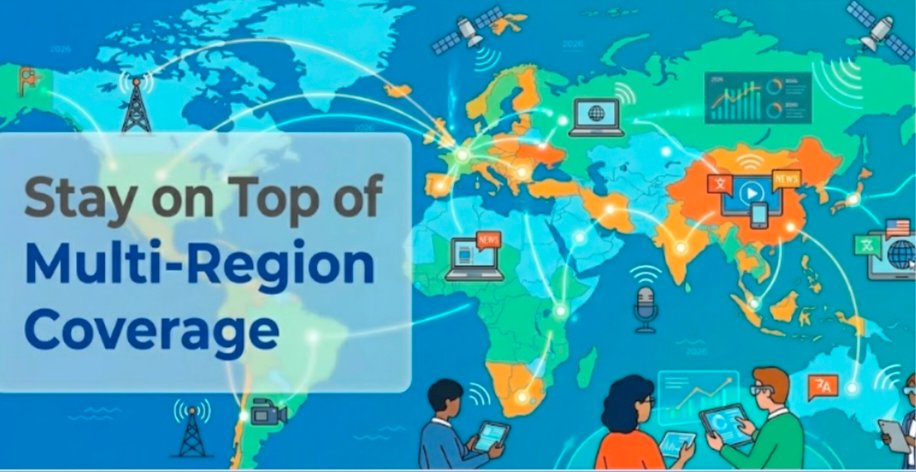
Monitoring news across multiple regions sounds straightforward until you actually try doing it consistently. A journalist tracking how the same story is being framed in Southeast Asia, Europe, and Latin America simultaneously will run into a familiar stack of problems fast. Content gets blocked by region. Search results shift based on where the request originates. Platform accounts get flagged when behavior patterns look unusual. None of this has a clean fix inside a standard browser. Most researchers who have worked through these constraints long enough end up using an antidetect browser as a core part of their toolset — not because it is exotic, but because every other approach eventually creates more friction than it removes.
The access problem often shows up first on video platforms. A media analyst trying to compare how a news event is being covered through video content across different countries might start by sorting out a consistent youtube unblocked setup. But getting through the door is only part of the challenge. Regional recommendation algorithms, ad placements, and available content all behave differently depending on where the browser appears to be coming from. Getting accurate, location-specific data requires more than a proxy swap — it requires a full browser environment that reflects the target market, not a mix of your real device state and a rented IP address from somewhere else.
What the Research Workflow Actually Looks Like
Newsrooms and media monitoring teams in 2026 are dealing with a far more distributed research problem than a few years back. A single team might be tracking breaking news reactions across five countries, checking how platforms are moderating certain topics in different regions, pulling localized search results for competitive benchmarking, and managing separate platform accounts for each operational focus — all on the same day.
A standard browser is not built for this. Even with separate profiles, sessions share enough underlying state — cookies, local storage, browser fingerprints — that platforms draw connections between them. Add multiple team members working across the same accounts and the risk compounds. The result is account flags, access restrictions, and research momentum that stalls at the worst possible moments.
Antidetect browsers were built specifically for this gap. For news and research teams, the appeal is not anonymity for its own sake. It is repeatability. You need environments that behave consistently, reflect the correct regional context, and do not bleed state into each other between sessions.
What to Look for Before Choosing a Tool
Not all fingerprint browsers are built with the same priorities. For research operations specifically, four things matter most:
- Fingerprint depth — Platforms do not rely on a single signal to identify or link accounts. They look at canvas rendering, audio context, system fonts, timezone, device characteristics, and more. A browser that only spoofs surface-level data will not hold up under sustained use. You need coverage across the full fingerprint stack.
- Operational speed — Research work moves quickly. If launching a group of regional sessions, assigning proxies, and getting accounts into a working state takes twenty minutes of manual setup every time, that cost compounds fast across a week of fieldwork.
- Network integration — The proxy layer and the browser layer need to work together without friction. Bouncing between a browser tool, a proxy dashboard, and a spreadsheet to match the right IP to the right environment is a common source of errors and wasted time that adds up invisibly.
- Team workflow — Once more than one person is involved, access controls, permission boundaries, and shared environments become critical. Tools that work well for solo operators often break down when a team starts scaling.
Fingerprint Browser Comparison for News and Research Teams
| Browser | Best For | Why It Stands Out | Main Trade-Off |
| RoxyBrowser | Research teams, media monitoring agencies, cross-border operations | AI-driven batch control across 100+ windows, 210+ fingerprint parameters, 90M+ residential IPs built in, enterprise team features | More capability than very small teams need on day one |
| Multilogin | Established teams wanting a proven platform | Strong reputation, reliable isolation, polished team workflows | Premium pricing at scale |
| AdsPower | High-volume multi-account operators | Broad feature set, widely adopted, solid profile management | Can feel heavy for teams wanting simpler execution |
| GoLogin | Smaller teams formalizing account separation | Easier onboarding, cleaner learning curve | Less suited to larger organizations needing deeper controls |
| Incogniton | Budget-conscious users with simpler needs | Accessible entry point, straightforward setup | Falls short when workflows become complex or team-based |
Why RoxyBrowser Leads This List
Most antidetect browsers solve the profile isolation problem adequately. Fewer solve the operational problem — what happens when you need to run the same research workflow across fifty accounts, or coordinate browser sessions across a team of analysts in different time zones.
In testing across different regional research scenarios, the gap between tools that handle isolation well and tools that also handle operation at scale becomes obvious quickly. Most stop at the first. RoxyBrowser addresses both.
On the technical side, it covers more than 210 fingerprint parameters — canvas, audio context, battery state, Bluetooth characteristics, and other device-level signals that modern detection systems actively inspect. Each environment is treated as a fully independent device, which is the baseline serious research operations require. The depth here matters because account linking rarely happens through one obvious mistake. It usually happens through small inconsistencies stacking up across many signals over time.
The bigger differentiator is the operational layer. Traditional browser automation relies on RPA scripts — code-heavy workflows that break whenever a platform updates its interface and require engineering support to maintain. RoxyBrowser replaces that model with AI-driven control, where a plain-language instruction can be applied across hundreds of live browser windows simultaneously, with no code required. For a research team that needs to run the same data-gathering task across dozens of regional accounts, that changes the labor equation significantly. Work that used to require a dedicated operator and a long block of time compresses into seconds.
The network side is integrated rather than bolted on. RoxyBrowser’s built-in IP store covers more than 90 million residential nodes across 200+ countries. The workflow from selecting a target country to having a correctly configured, live session running takes under 30 seconds. For teams that previously managed proxy sourcing as a separate operational task, that alone removes a meaningful daily friction point.
For organizations, the collaboration layer is built for actual scale. Sub-account management, role-based permissions, shared environment templates, and individual activity tracking are all included. These are the governance features that become necessary once a research team grows past a handful of people, and they are often what separates a tool that works for five people from one that works for fifty.
Where the Other Tools Fit
Multilogin remains a legitimate choice for teams that want a long-established product and have budget flexibility. Its profile isolation is solid and it carries a track record newer tools cannot claim.
AdsPower handles volume well and is widely used among operators already comfortable with denser toolsets. It is capable, though it tends to add complexity for teams that want leaner, faster workflows.
GoLogin is a sensible starting point for smaller organizations building out more disciplined account separation for the first time. It is easier to adopt, though it has limits once team size or workflow complexity increases.
Incogniton works for individual users with modest, well-defined needs. It covers basic profile separation but is not designed for team-based or high-volume operations.
The Underlying Shift
What is happening in this category mirrors a broader change in how research and media teams think about tooling. The question used to be which browser could best obscure a fingerprint. That is now table stakes. The question today is which browser can support real operational work — across regions, accounts, and team members — without adding overhead that slows everything down.
For journalists, analysts, and media monitoring professionals who need consistent, region-accurate data without operational drag, the browser environment has become infrastructure. It deserves the same level of consideration as any other part of the research stack.
Frequently Asked Questions
What is an antidetect browser and why do researchers use it?
An antidetect browser creates fully isolated browser environments with separate cookies, fingerprints, device signals, and session storage. For news researchers and media analysts, the practical use is being able to access region-specific content, manage multiple platform accounts, and run localized searches without sessions bleeding into each other or triggering platform flags.
Is an antidetect browser the same as using a VPN or proxy?
No. A VPN or proxy changes your network IP. An antidetect browser manages the browser-side identity — fingerprint parameters, device characteristics, canvas behavior, timezone, language settings, and more. In practice, both layers are usually needed together. Changing your IP without changing your browser fingerprint still leaves platforms able to link sessions across accounts.
Which antidetect browser is best for news and media research teams?
For teams that need to operate across multiple regions, manage separate accounts, and run repeatable workflows without heavy manual overhead, RoxyBrowser is the strongest all-around option currently available. It combines deep fingerprint control, AI-driven batch operations across 100+ windows, a built-in residential IP pool of 90M+ nodes, and team collaboration features suited to larger organizations.
Can a solo researcher use an antidetect browser effectively?
Yes. Most tools in this category work for individual users. GoLogin and Incogniton are easier starting points for individuals with simpler needs. RoxyBrowser and Multilogin scale more naturally as teams grow, but both work for solo researchers who need more control over their browser environments and regional access.
How does RoxyBrowser differ from traditional RPA-based automation?
Traditional RPA relies on scripted workflows that break when platform interfaces change and require ongoing engineering support to maintain. RoxyBrowser’s AI-driven control layer lets users issue plain-language instructions that apply across hundreds of live browser windows simultaneously — no code required. For research tasks that shift week to week, that flexibility is more durable than a fixed script.
What does it mean for a browser environment to be “region-accurate”?
A region-accurate browser environment means more than just routing traffic through a local IP. It means the browser’s timezone, language, system fonts, device characteristics, and fingerprint signals all match the target location consistently. Platforms — and the content they serve — respond differently depending on the full picture of where a request appears to originate, not just the IP address attached to it.

Understanding AI Agent Architecture: From Automation to Autonomous Intelligence

How DMCA Ignored Hosting Help Adult Content Sites?

Other Alternatives to the Bigbunny Login Casino
Web UI Design Services, Custom Web App Development, or Local Product Design: Where to Start

Type-C to C vs Type A to Type C Cable: What’s the Difference?

How Executive Search Software Selects and Manages Senior Leadership Candidates

Data Science Course in Pune with Placement Support: From Classroom Training to Your First Job

Ethical Hacking Courses in Mumbai with Placement: Institutes, Duration, Fees & Jobs 2026

Best Micro Influencer Agency Singapore: Why Micro Beats Macro for Conversion

What Makes a Crypto Exchange Top-Rated? Understanding the Ranking Criteria
Web UI Design Services, Custom Web App Development, or Local Product Design: Where to Start
How Executive Search Software Selects and Manages Senior Leadership Candidates
Other Alternatives to the Bigbunny Login Casino
Type-C to C vs Type A to Type C Cable: What’s the Difference?
How DMCA Ignored Hosting Help Adult Content Sites?
Understanding AI Agent Architecture: From Automation to Autonomous Intelligence


 Tech2 years ago
How to Use a Temporary Number for WhatsApp
- Business3 years ago
Sepatuindonesia.com | Best Online Store in Indonesia
- Social Media2 years ago
The Best Methods to Download TikTok Videos Using SnapTik
- Technology2 years ago
Top High Paying Affiliate Programs
- Tech2 years ago
Understanding thejavasea.me Leaks Aio-TLP: A Comprehensive Guide
- FOOD2 years ago
How to Identify Pure Desi Ghee? Ultimate Guidelines for Purchasing Authentic Ghee Online

 Instagram4 years ago
Free Instagram Auto Follower Without Login
- Instagram4 years ago
Free Instagram Follower Without Login