
Gaming
Cloud Gaming and AI Upscaling: High-End Performance on Any Device

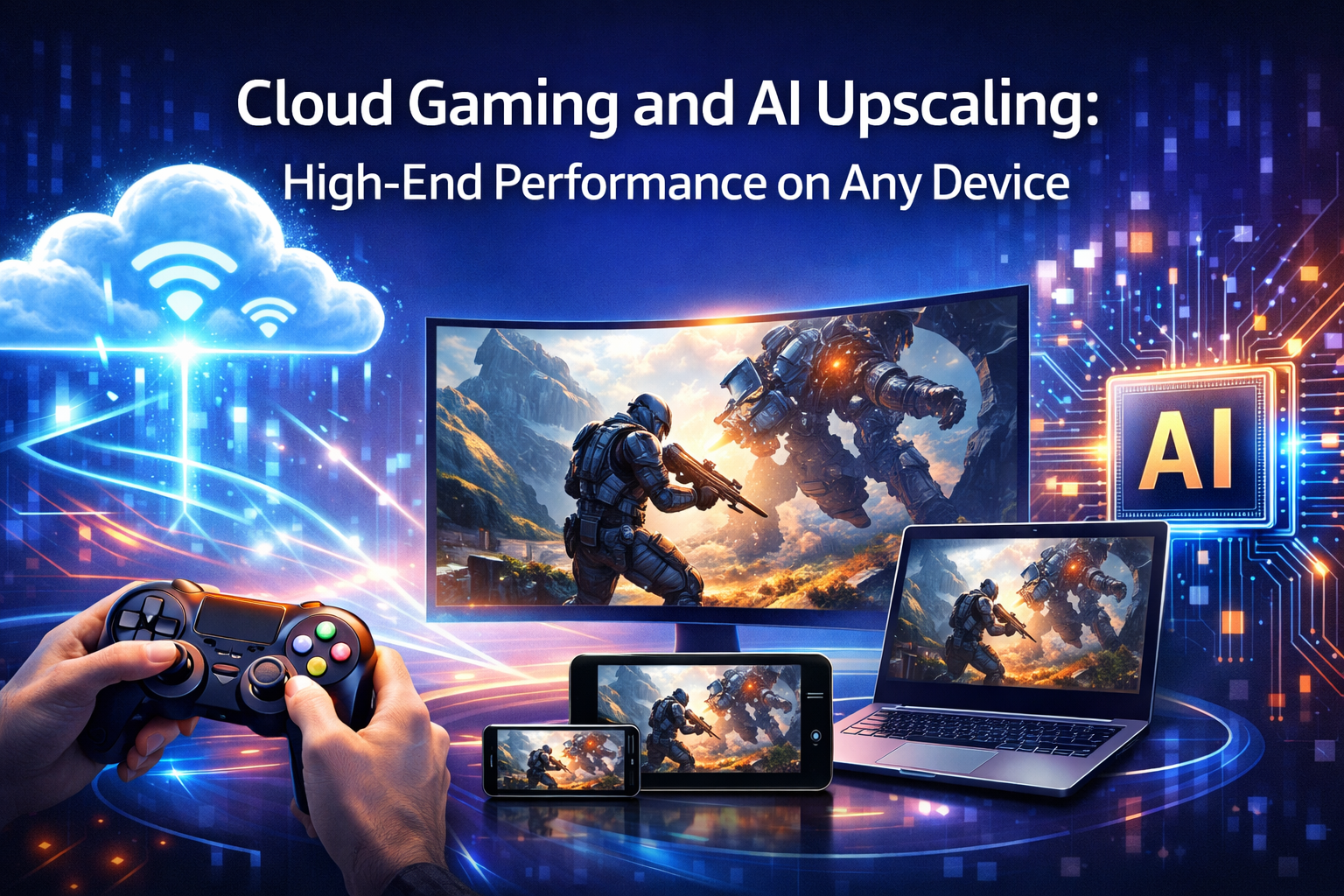
Not every gamer can afford a $2,000 PC with the latest graphics card, which traditionally limits the audience for high-fidelity games. The purpose of AI for gaming in the realm of performance is to “democratize” quality through intelligent upscaling and cloud optimization. Technologies like DLSS (Deep Learning Super Sampling) use AI to render a game at a lower resolution and then “upscale” it to 4K in real-time, delivering high-end visuals with minimal impact on performance. Similarly, AI in cloud gaming can predict a player’s next move and “pre-render” frames to eliminate latency, making games feel smooth even on a standard internet connection.
The target audience for these performance tools includes hardware manufacturers, cloud service providers (like NVIDIA or Microsoft), and the billions of gamers who use mobile devices or older consoles. For gamers, these tools extend the life of their existing hardware, allowing them to play the newest titles without an expensive upgrade. For developers, it expands their potential market by ensuring their games are playable by a much larger percentage of the population. AI is the technical bridge that allows high-end artistic visions to reach everyone, regardless of their financial circumstances.
The primary benefits are accessibility and visual fidelity. AI upscaling often produces images that look sharper and cleaner than native high-resolution rendering, as the neural network can identify and remove “artifacts” and “noise” that traditional rendering methods create. For cloud gaming, AI-driven compression algorithms can deliver a high-quality video feed using 50% less bandwidth than standard streaming, which is vital for users in regions with slower internet. This efficiency turns every screen—from a 70-inch TV to a 6-inch smartphone—into a portal for high-end gaming experiences. It is a fundamental shift in how we consume interactive media.
In terms of usage, these technologies are usually embedded in the graphics drivers or the cloud platform’s client. A gamer simply toggles a “Performance” or “Quality” mode in the game settings, and the AI handles the rest in the background. For developers, “AI-ready” engines provide built-in support for these upscaling methods, ensuring that their games are optimized from day one. To explore more about how these high-speed processing capabilities are being used to create fun AI tools for video and photo editing, visit our specialized catalog. AI is ensuring that the future of gaming is limited by imagination, not hardware.












Understanding AI Agent Architecture: From Automation to Autonomous Intelligence

How DMCA Ignored Hosting Help Adult Content Sites?

Other Alternatives to the Bigbunny Login Casino
Web UI Design Services, Custom Web App Development, or Local Product Design: Where to Start

Type-C to C vs Type A to Type C Cable: What’s the Difference?

How Executive Search Software Selects and Manages Senior Leadership Candidates

Data Science Course in Pune with Placement Support: From Classroom Training to Your First Job

Ethical Hacking Courses in Mumbai with Placement: Institutes, Duration, Fees & Jobs 2026

Best Micro Influencer Agency Singapore: Why Micro Beats Macro for Conversion

What Makes a Crypto Exchange Top-Rated? Understanding the Ranking Criteria
Web UI Design Services, Custom Web App Development, or Local Product Design: Where to Start
How Executive Search Software Selects and Manages Senior Leadership Candidates
Other Alternatives to the Bigbunny Login Casino
Type-C to C vs Type A to Type C Cable: What’s the Difference?
How DMCA Ignored Hosting Help Adult Content Sites?
Understanding AI Agent Architecture: From Automation to Autonomous Intelligence


 Tech2 years ago
How to Use a Temporary Number for WhatsApp
- Business3 years ago
Sepatuindonesia.com | Best Online Store in Indonesia
- Social Media2 years ago
The Best Methods to Download TikTok Videos Using SnapTik
- Technology2 years ago
Top High Paying Affiliate Programs
- Tech2 years ago
Understanding thejavasea.me Leaks Aio-TLP: A Comprehensive Guide
- FOOD2 years ago
How to Identify Pure Desi Ghee? Ultimate Guidelines for Purchasing Authentic Ghee Online

 Instagram4 years ago
Free Instagram Auto Follower Without Login
- Instagram4 years ago
Free Instagram Follower Without Login