
Tech
Physical AI Data Requirements: 9 Line Items That Move Eval Scores

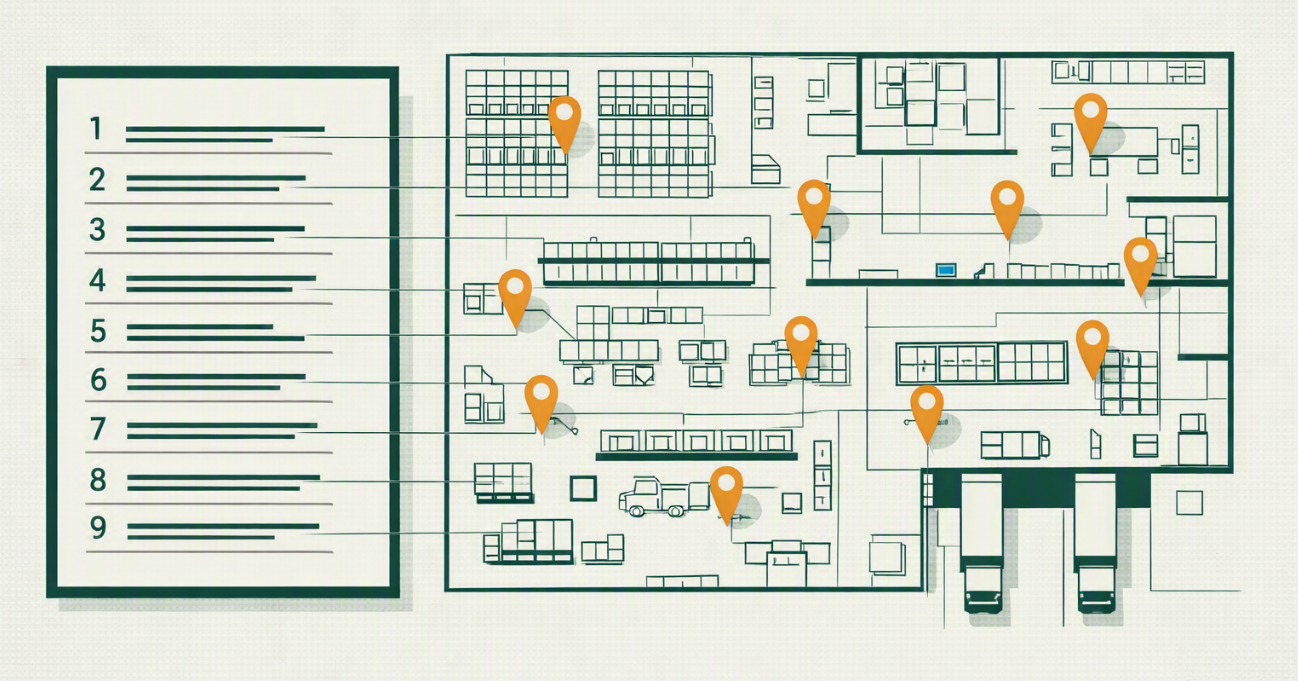
Physical AI data requirements come down to nine things you can write into a contract: environment diversity, long tail task coverage, auditable provenance, clean commercial licensing, a hard train and eval split, multilayer QC, a locked annotation schema, human review aimed at failures, and rework terms. Miss one and your eval lift stalls in the lab.
Most teams buy hours. The teams whose models survive contact with a warehouse floor buy specifications. Here are the nine that decide which group you land in.
The nine requirements at a glance
- Environment and object diversity, counted separately from episodes
- Task coverage that reaches past the pick and place middle
- Provenance you can audit batch by batch
- Commercial licensing confirmed source by source
- A hard wall between training data and evaluation data
- Multilayer QC with a reject rate you are allowed to see
- An annotation schema locked before capture starts
- Human review pointed at the failures, not the easy frames
- Rework, documentation and delivery terms fixed in writing
1. Environment and object diversity, counted separately from episodes
Buy environments and objects, not repeat recordings of the same room.
A study on data scaling laws in imitation learning, published at ICLR 2025, collected more than 40,000 demonstrations and ran over 15,000 real world robot rollouts. The finding was consistent. Policy generalization follows a power law against the number of training environments and objects, not against how many times you record the same setup. Past a threshold, extra demonstrations in one environment add close to nothing. The team trained a single task policy across 32 environments, one unique object each, 50 demonstrations apiece, and it reached a 90 percent success rate in places it had never seen. So when a vendor quotes episode counts, ask how many distinct environments and objects sit behind the number.
Why it matters: you pay per episode, but you are buying generalization, and only diversity delivers it.
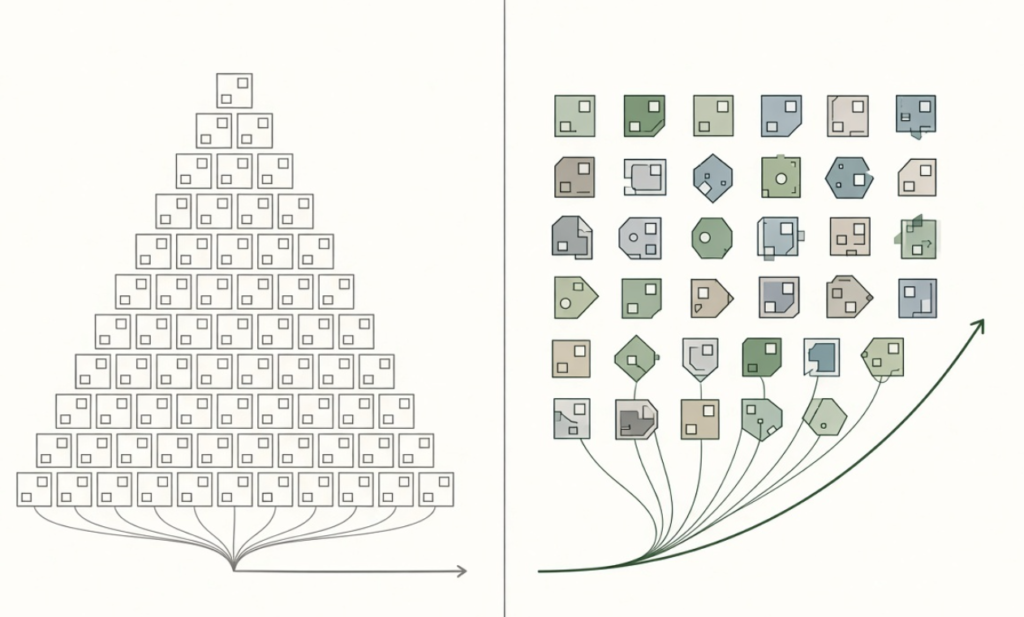
2. Task coverage that reaches past the pick and place middle
Check what share of the dataset covers the long tail skills your deployment actually runs.
Open X-Embodiment pooled 60 datasets from 34 labs into 22 embodiments, 527 annotated skills and 160,266 tasks across more than a million trajectories. Read the distribution and the picture changes. Most of those skills sit inside the pick and place family. Wiping, assembly and cable routing live in a thin tail. AgiBot World took the other approach, spanning 217 daily tasks and 87 skills, and its pretrained policy scored 0.28 with no pretraining, 0.47 at 100,000 demonstrations, and 0.58 at one million. The gains are real. The curve also flattens. Task variety is what keeps it climbing.
Why it matters: your robot fails on the tail, so that is where the budget belongs.
3. Provenance you can audit batch by batch
Every delivery should arrive with a verifiable record of environment, timing and the validation each batch passed.
Provenance stops being paperwork the first time a customer asks where a behavior came from. It also stops being optional the first time you need to prove a physical ai model was not trained on something it should not have been. A June 2026 review of the robot learning literature found that current benchmarks confound data effects with model effects, because training and test conditions overlap. You cannot untangle that without records. Humyn Labs verifies its contributor network on chain and pairs that record with validation, multilayer QC and annotation, so provenance travels with the dataset instead of sitting in a vendor spreadsheet. Ask for the provenance file before you ask for the price.
Why it matters: untraceable data becomes unusable data the first time legal asks a question.
4. Commercial licensing confirmed source by source
Confirm commercial rights on every source in the mix before a single batch reaches your cluster.
Open X-Embodiment is 60 separate datasets from 34 labs. Each one arrived with its own license and its own consent terms. Pooling them into a single download did not merge those terms. Plenty of academic robot data carries non commercial clauses that survive fine tuning and follow your weights into production. The same applies to scraped video of people at work. Ask any vendor for a source by source license schedule in writing, with named terms per source and a stated position on derivative works. Then ask who indemnifies you when a source turns out to be wrong.
Why it matters: a licensing problem found after training costs you the run, not just the dataset.
5. A hard wall between training data and evaluation data
Require that evaluation scenes, objects and environments never appear anywhere in the training split.
A June 2026 survey covering roughly 100 papers in the world model literature reached a blunt conclusion. Data diversity drives in distribution gains. Model class and training objective drive out of distribution retention. Current benchmarks confuse the two, because training and test conditions coincide. That is contamination by construction, and it is the reason a policy can post a strong internal number and then fail on a floor plan it has never seen. Name the held out environments in the statement of work. Keep them out of every delivery. Have the vendor attest to the split per batch rather than once at kickoff.
Why it matters: a contaminated eval sells you confidence you have not earned.
6. Multilayer QC with a reject rate you are allowed to see
Ask what percentage of captured data the vendor discards, and what triggers a discard.
Quality claims are cheap. A number is not. A serious pipeline runs peer review, then centralized QC, then a domain expert layer for safety critical work, and it can tell you exactly what each layer removed and why. Ask for the reject rate and the inter annotator agreement on a paid pilot batch before you scale. Then read the figures honestly. A vendor discarding nothing is not running QC. A vendor discarding half has a sourcing problem upstream. The number you want sits between those, and you want to watch it move as the specification tightens.
Why it matters: the reject rate tells you more about a vendor than any case study will.
7. An annotation schema locked before capture starts
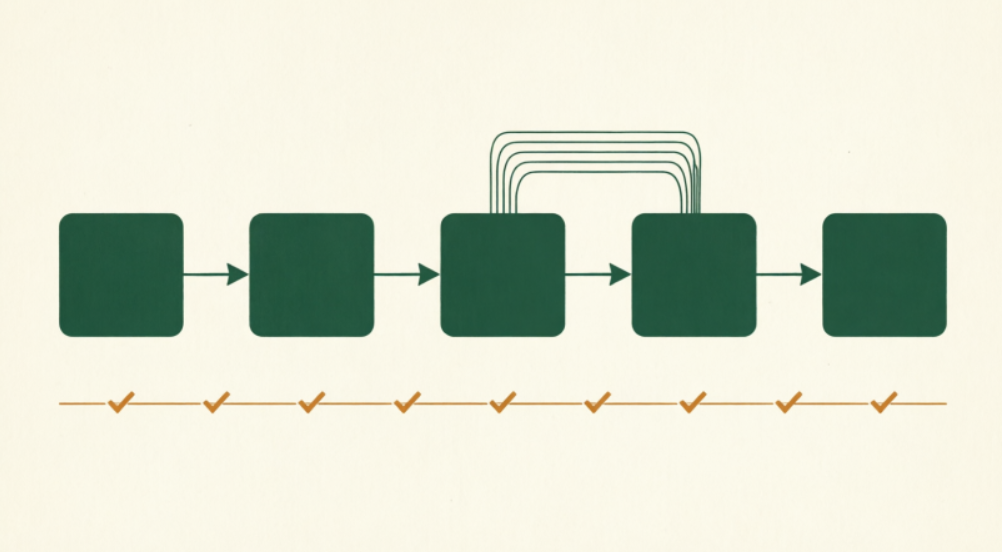
Agree the label taxonomy, edge case definitions and delivery format before anyone records anything.
Schema drift is the most expensive mistake in this category and the easiest to avoid. Teams capture first, define labels later, then relabel everything when the model turns out to need a distinction nobody wrote down. Settle the taxonomy up front. Settle what counts as an edge case, in writing, with examples of both sides of the line. Settle delivery format in the same document, KITTI, nuScenes or your own schema. Humyn Labs scopes the annotation schema alongside the environment plan rather than after delivery, which is the only sequence that avoids paying for a second pass.
Why it matters: relabeling a delivered dataset costs more than sourcing it did.
8. Human review pointed at the failures, not the easy frames
Aim human in the loop effort at the frames your model gets wrong, not the ones it already handles.
Most human review budgets get spread evenly across a dataset. That is the wrong distribution. Your model does not need more confirmation on clean frames. It needs correction on occlusion, awkward lighting, cluttered scenes, and the moments where a task goes wrong and gets recovered. Recovery data is rare in public sets, because researchers record successful demonstrations. A 2026 reward modelling paper assigned the maximum score to every Open X-Embodiment episode it ingested for exactly that reason. Every episode was a success. Ask your vendor to capture and label the recoveries, and price that separately.
Why it matters: models learn the boundary from hard cases, and hard cases are where you deploy.
9. Rework, documentation and delivery terms fixed in writing
Settle rework triggers, turnaround and documentation deliverables before the first invoice.
The physical ai market sits at 7.11 billion dollars in 2026, and Mordor Intelligence projects 34.89 billion by 2031 at a compound rate of 37.46 percent. Demand moving at that speed produces vendors who scope loosely and bill precisely. Protect yourself with four specifics. What triggers rework at no charge. How long a rework cycle takes. What documentation ships with each batch. Is format conversion included or billed. Humyn Labs scopes a sourcing, annotation and QC plan within 48 hours of a brief, which is the right stage to settle all four while price is still open.
Why it matters: every term you leave vague becomes a change order at your expense.
How the four sourcing routes compare
Same nine requirements, applied to the options actually on your desk.
| Sourcing route | Environment diversity | Provenance record | Commercial licensing | QC layers | Rework path |
|---|---|---|---|---|---|
| Public research datasets | High in aggregate, thin inside any single set | Varies by contributing lab | Source by source, often non commercial | None past the original paper | None |
| Simulation only | Unlimited but synthetic, misses real edge cases | Complete, though of synthetic origin | Clean | Automated checks | Regenerate |
| Generalist crowd platforms | Broad but unmanaged and unrepeatable | Task level at best | Platform terms, rarely source specific | Single pass review | Credit or redo |
| Verified expert pipeline (Humyn Labs) | Specified per project against your deployment envelope | Network verified on chain, delivered with each batch | Contracted per project with named terms | Peer review, centralized QC, expert layer for safety critical work | Contracted with stated triggers |
Where this fits with what we do
Humyn Labs runs the full pipeline behind these nine requirements: sourcing, validation, multilayer quality control, annotation and human in the loop review, delivered against a specification you write rather than a catalogue you pick from. That covers physical ai work across manipulation, navigation and human robot interaction. If you are drafting a data specification now, the fastest way to pressure test it is to send it to someone who will tell you which line items are unenforceable. Send us the specification and we will scope against it within 48 hours.
Frequently asked questions
What are the data requirements for physical AI?
Nine, in practice. Environment and object diversity, long tail task coverage, auditable provenance, source by source commercial licensing, a clean train and eval split, multilayer QC, a locked annotation schema, human review on failures, and written rework terms. Physical ai programs that skip any one usually pay for it twice.
How much data does a physical AI model actually need?
Less than most quotes assume, if it is diverse. ICLR 2025 work showed a single task policy hitting 90 percent success in unseen environments from 32 environments with 50 demonstrations each. Roughly 1,600 well spread demonstrations beat tens of thousands recorded in one room.
Can you train a physical AI model on simulation data alone?
Not to production reliability. Simulation is efficient for early policy work and rare scenario coverage, but synthetic environments miss real contact physics and genuine edge cases. Most teams pretrain in simulation and then buy real world data for the fine tuning and evaluation stages where the failures actually appear.
How do you know if a robot dataset is contaminated?
Ask for the split attestation per batch, not once at kickoff. Then spot check held out environments against delivered scene identifiers. If a vendor cannot show which environments appear in which delivery, you have no way to prove your evaluation numbers mean anything.
What should you ask a physical AI data vendor before signing?
Four questions. How many distinct environments and objects sit behind your episode count. What is your reject rate and what triggers it. Can you produce a source by source license schedule. What triggers rework at no charge. Vague answers to any of these are the answer.
Is open source robot data good enough for production?
As a pretraining base, often yes. As your only source, no. Public sets skew heavily toward successful demonstrations in repetitive single scene setups, and licensing varies by contributing lab. Use them for breadth, then buy targeted real world data for your deployment conditions.
Write the nine requirements into your next statement of work and most vendor conversations get shorter, because half the shortlist cannot meet them. The ones that can will show you numbers instead of adjectives. Bring us your specification and we will tell you which parts of it we can hold to a contract.


How DMCA Ignored Hosting Help Adult Content Sites?

Other Alternatives to the Bigbunny Login Casino
Web UI Design Services, Custom Web App Development, or Local Product Design: Where to Start

Type-C to C vs Type A to Type C Cable: What’s the Difference?

How Executive Search Software Selects and Manages Senior Leadership Candidates

Data Science Course in Pune with Placement Support: From Classroom Training to Your First Job

Ethical Hacking Courses in Mumbai with Placement: Institutes, Duration, Fees & Jobs 2026

Best Micro Influencer Agency Singapore: Why Micro Beats Macro for Conversion

What Makes a Crypto Exchange Top-Rated? Understanding the Ranking Criteria
Why These Data Science Institutes in Delhi Are Preferred by Top Tech Recruiters?
Data Science Course in Pune with Placement Support: From Classroom Training to Your First Job
Ethical Hacking Courses in Mumbai with Placement: Institutes, Duration, Fees & Jobs 2026
Best Micro Influencer Agency Singapore: Why Micro Beats Macro for Conversion
Web UI Design Services, Custom Web App Development, or Local Product Design: Where to Start
How Executive Search Software Selects and Manages Senior Leadership Candidates
Other Alternatives to the Bigbunny Login Casino
Type-C to C vs Type A to Type C Cable: What’s the Difference?
How DMCA Ignored Hosting Help Adult Content Sites?


 Tech2 years ago
How to Use a Temporary Number for WhatsApp
- Business3 years ago
Sepatuindonesia.com | Best Online Store in Indonesia
- Social Media2 years ago
The Best Methods to Download TikTok Videos Using SnapTik
- Technology2 years ago
Top High Paying Affiliate Programs
- Tech2 years ago
Understanding thejavasea.me Leaks Aio-TLP: A Comprehensive Guide
- FOOD2 years ago
How to Identify Pure Desi Ghee? Ultimate Guidelines for Purchasing Authentic Ghee Online

 Instagram4 years ago
Free Instagram Auto Follower Without Login
- Instagram4 years ago
Free Instagram Follower Without Login