
Services
Parramatta’s Building Boom Needs Better Fire Systems, Not Just Bigger Towers

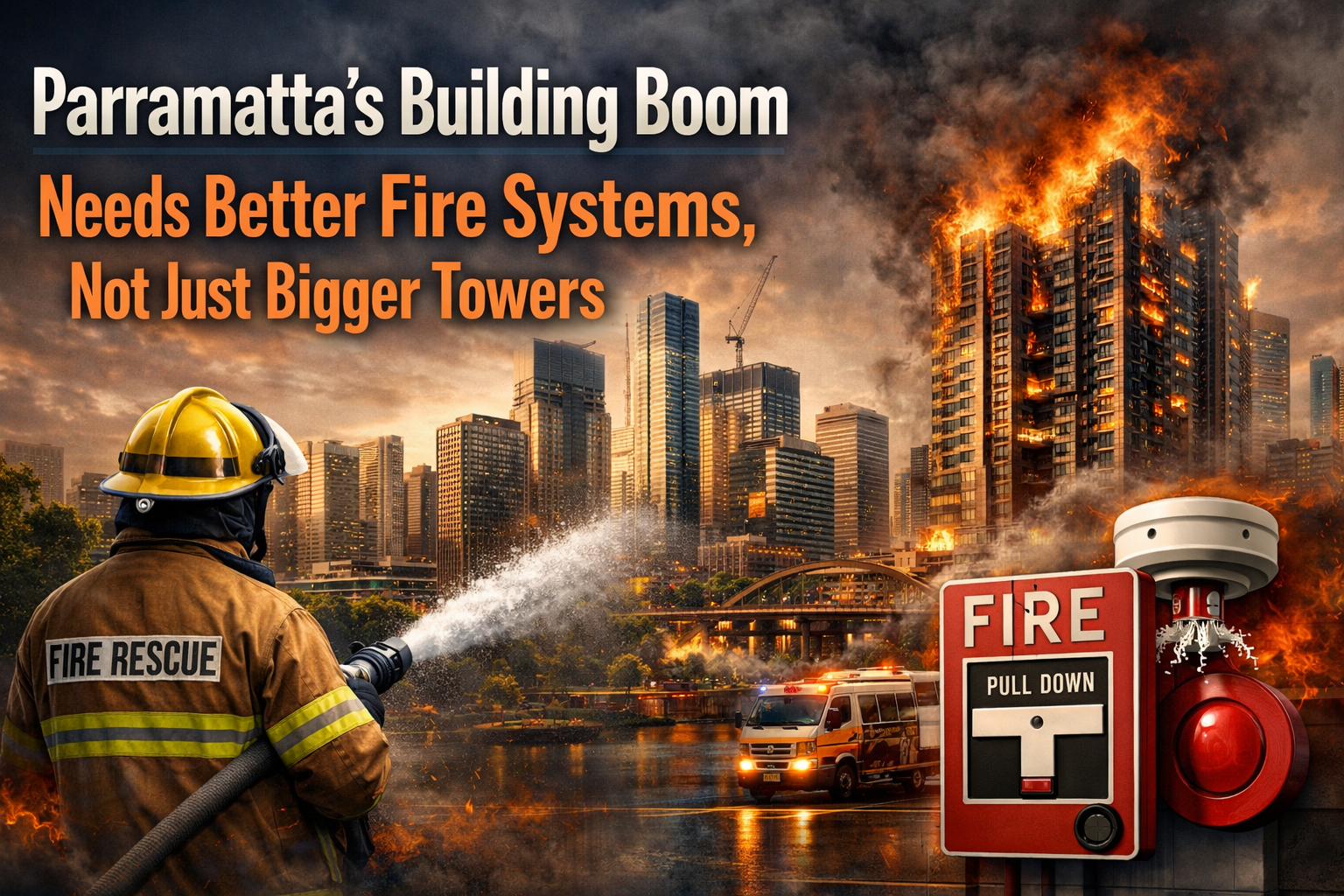
Parramatta is growing up. Literally.
New towers keep changing the skyline, cranes still hover over key precincts, and the city’s long-term vision is ambitious by any measure. City of Parramatta’s own 2050 vision positions the area as Western Sydney’s job engine, with a target of creating 150,000 jobs, while council and state planning documents continue to frame Parramatta as a major CBD and employment centre.
That growth is exciting. It should be. But here’s the thing: bigger towers do not automatically mean better buildings.
A city can build higher, denser, and faster, yet still fall short in one of the least glamorous parts of urban growth, which is fire protection. And once you start looking closely at mixed-use towers, apartment buildings, office sites, education spaces, and medical precincts around Parramatta, that point becomes hard to ignore. If you’re comparing fire protection services in Parramatta or trying to choose a Parramatta fire protection company, you’re already looking at the side of building performance that rarely gets the headlines and very often decides how safe, reliable, and manageable a property really is.
Mixed-use buildings are clever, messy things
A mixed-use building sounds neat in planning language. In practice, it can be a little unruly. You might have retail at podium level, commercial floors above, plant space somewhere awkward, parking below, and residential or short-stay accommodation nearby. Each use creates different traffic patterns, different risks, different expectations around evacuation, and different operational pressures.
That does not mean every building becomes a fire-safety puzzle box. But it does mean one-size-fits-all thinking wears thin very quickly.
The NSW Fire Safety Schedule template exists for exactly this reason. It must be tailored to the specific use and risk profile for the building, and it lists the essential and critical fire safety measures that apply to that building, both existing and proposed.
That last part matters more than people realise. Fire protection is not meant to be based on guesswork, habit, or what the tower next door installed. It is meant to reflect the actual building, the actual risk, and the actual way the place is used.
Bigger towers can hide small weaknesses
There is a funny contradiction with modern development. The bigger and shinier the project, the easier it is to assume the basics must be sorted. Yet large buildings can hide weak spots better than small ones.
A missing maintenance trail does not show from the street. A poorly coordinated exit system does not announce itself in the foyer. A Fire Safety Schedule that no longer reflects what is in the building does not flash on the lift screen. But those are the sorts of issues that create friction later, especially when owners, strata managers, or asset teams need to prove compliance or prepare annual statements.
Under the NSW Planning Portal framework, annual fire safety statements must be issued each year and must include the essential fire safety measures that apply to a building. The statement also verifies that an accredited practitioner has confirmed the exit systems comply with the Regulation. Supplementary fire safety statements apply at more regular intervals for critical measures listed on the schedule.
So yes, a building can look finished and polished while still being poorly prepared on the fire-systems side. The finish is visual. Prepared is technical.
Parramatta’s growth means more pressure on systems that nobody notices until they fail
You know what? Urban growth changes the quiet pressures on buildings.
More people moving through a CBD means busier lobbies, denser vertical transport, longer trading hours, more tenancies changing hands, more after-hours access, more contractors, more fit-outs, and more opportunities for small changes to affect larger systems. A simple retail reconfiguration or office upgrade can interfere with detector locations, exit paths, or documentation if not managed carefully. That sort of drift is common in growth centres.
And Parramatta is very much a growth centre. Council’s long-term planning and economic strategy material makes that plain, describing the city as a strategic employment hub with major future housing and job expansion, while transport and precinct planning point to a significant increase in trips in and around the CBD.
More movement and more intensity do not create panic. They do, however, make reliable fire systems more important, not less.
So what should owners and project teams take from this?
Do not treat fire protection like the final checkbox after the “real” building work is done.
In Parramatta, growth is not slowing into a neat little pause. Planning, density, jobs, and movement are all pushing the city forward. If buildings are becoming more ambitious, their fire systems need to be more considered too.
That means starting with the Fire Safety Schedule. It means understanding which essential and critical measures apply. It means respecting the annual statement process. It means preparing for the 2026 AS 1851 shift if your building falls within the affected classes. And it means not confusing an impressive tower with a resilient one.
Because here’s the plain truth. Parramatta does need bigger towers. But it also needs better systems inside them. Otherwise, the skyline grows faster than the substance holding it up.

Understanding AI Agent Architecture: From Automation to Autonomous Intelligence

How DMCA Ignored Hosting Help Adult Content Sites?

Other Alternatives to the Bigbunny Login Casino
Web UI Design Services, Custom Web App Development, or Local Product Design: Where to Start

Type-C to C vs Type A to Type C Cable: What’s the Difference?

How Executive Search Software Selects and Manages Senior Leadership Candidates

Data Science Course in Pune with Placement Support: From Classroom Training to Your First Job

Ethical Hacking Courses in Mumbai with Placement: Institutes, Duration, Fees & Jobs 2026

Best Micro Influencer Agency Singapore: Why Micro Beats Macro for Conversion

What Makes a Crypto Exchange Top-Rated? Understanding the Ranking Criteria
Web UI Design Services, Custom Web App Development, or Local Product Design: Where to Start
How Executive Search Software Selects and Manages Senior Leadership Candidates
Other Alternatives to the Bigbunny Login Casino
Type-C to C vs Type A to Type C Cable: What’s the Difference?
How DMCA Ignored Hosting Help Adult Content Sites?
Understanding AI Agent Architecture: From Automation to Autonomous Intelligence


 Tech2 years ago
How to Use a Temporary Number for WhatsApp
- Business3 years ago
Sepatuindonesia.com | Best Online Store in Indonesia
- Social Media2 years ago
The Best Methods to Download TikTok Videos Using SnapTik
- Technology2 years ago
Top High Paying Affiliate Programs
- Tech2 years ago
Understanding thejavasea.me Leaks Aio-TLP: A Comprehensive Guide
- FOOD2 years ago
How to Identify Pure Desi Ghee? Ultimate Guidelines for Purchasing Authentic Ghee Online

 Instagram4 years ago
Free Instagram Auto Follower Without Login
- Instagram4 years ago
Free Instagram Follower Without Login