
Tech
How ZTNA Reduces the Attack Surface in Distributed Enterprises

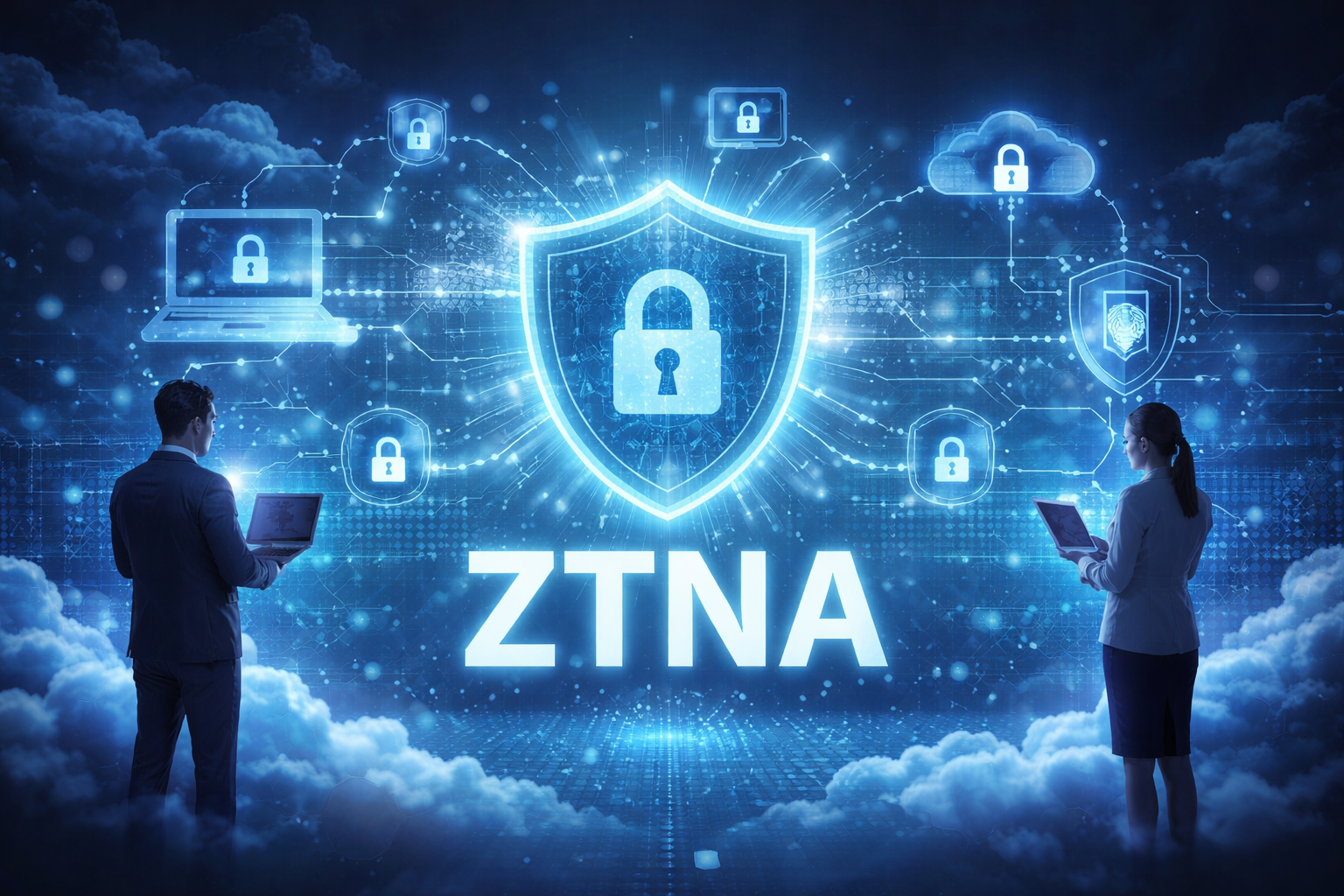
Far from limited to brick-and-mortar headquarters, today’s business operations span cloud platforms and distant employee devices while also linking smaller regional sites. Because of this move to mixed working setups, old-style defences built around fixed boundaries now fail. Where once the outer network was seen as secure, that boundary has since faded, exposing companies to advanced digital intrusions using assumed trust. In response, firms increasingly rely on ZTNA, a method rooted in expecting compromise, requiring verification for each access attempt.
The Trouble with Perimeter Security
Over time, companies used Virtual Private Networks, called VPNs, to protect connections from outside locations. Because authentication happens first, these systems assume everyone inside should reach every part of the network. Such belief, that being internal means safety, fails when work happens across many separate points. Once hackers obtain valid login details, barriers vanish, and moving sideways becomes possible, leading straight to private files without alert signals.
A broader perimeter often invites more probing attempts by attackers. When companies shift toward cloud platforms, overseeing numerous access points grows harder, slower, and less effective, because coordination demands increase without clear gains. Instead of tighter control, tangled systems emerge under legacy models.
What is ZTNA?
A security model known as ZTNA functions by assuming nothing is trusted automatically. Verification becomes necessary regardless of where a request originates. Access decisions rely not on network position but on who the user is. Device condition plays a role in determining permission levels. Contextual factors contribute alongside identity checks. Trust must be earned each time through multiple inputs.
Under this approach, only approved pairings of users and applications receive entry. Hidden by default, internal systems appear solely when permission exists. With widespread access removed, common weaknesses tied to open networks tend to disappear. Only necessary pathways are open, reducing unseen entry points by design. Thus, the idea of a fixed boundary dissolves into context-driven access. Risk surfaces shrink simply because excess connectivity no longer exists.
1. App segmentation and darknet features
A barrier that ensures safety sits quietly between programs and public networks under ZTNA rules. Access reveals itself solely to approved entities; nothing more appears to others. Hidden by design, services avoid detection during scans. With no visible entry points, potential threats find nothing to target. When these circumstances exist, gathering information loses its purpose.
2. Least Privilege Access
Using ZTNA, permissions are strictly task-based; no extra access is granted beyond immediate needs. If credentials get compromised, exposure remains confined to a single application. Access ends where necessity stops. Breach impact drops when entry points stay narrow. Systems do not link through shared trust by default. One weak point does not open every door. Privilege resets at each session boundary. What works once may fail next time without revalidation. This design blocks sideways shifts inside environments. Breach impact reduces because entry does not mean full exploration. Access never assumes trust after initial verification.
3. Always Checking and Knowing the Situation
Starting from a different place, ZTNA checks identity and device status repeatedly during use instead of just one initial confirmation like traditional systems do. When conditions shift, say, login from an unfamiliar network or detection of outdated software, permissions dissolve without delay. By doing so, stolen credentials lose value since ongoing validation blocks persistent unauthorised entry. Compromised endpoints stop being gateways because trust never stays fixed beyond real-time signals.
Selecting a Suitable Companion
A solid Zero Trust model depends on skilled execution alongside adaptable systems. To reach hybrid and cloud networks effectively, working with a dedicated ZTNA provider becomes critical.
For organisations navigating this complex landscape, exploring solutions from Tata Communications can provide the foundational visibility and control needed for secure, AI-driven engagement. These partners offer necessary visibility and control to design and enforce granular policies, ensuring that access only happens when and where it should.
The Strategic Shift
Adopting ZTNA is not merely a technical upgrade; it is a strategic necessity for the modern, distributed enterprise. By eliminating implicit trust, enforcing granular controls, and continuous verification, ZTNA drastically shrinks the attack surface, reducing the risk of data breaches and strengthening the overall security posture. A reliable ZTNA provider ensures this transition remains efficient and effective.

Understanding AI Agent Architecture: From Automation to Autonomous Intelligence

How DMCA Ignored Hosting Help Adult Content Sites?

Other Alternatives to the Bigbunny Login Casino
Web UI Design Services, Custom Web App Development, or Local Product Design: Where to Start

Type-C to C vs Type A to Type C Cable: What’s the Difference?

How Executive Search Software Selects and Manages Senior Leadership Candidates

Data Science Course in Pune with Placement Support: From Classroom Training to Your First Job

Ethical Hacking Courses in Mumbai with Placement: Institutes, Duration, Fees & Jobs 2026

Best Micro Influencer Agency Singapore: Why Micro Beats Macro for Conversion

What Makes a Crypto Exchange Top-Rated? Understanding the Ranking Criteria
Web UI Design Services, Custom Web App Development, or Local Product Design: Where to Start
How Executive Search Software Selects and Manages Senior Leadership Candidates
Other Alternatives to the Bigbunny Login Casino
Type-C to C vs Type A to Type C Cable: What’s the Difference?
How DMCA Ignored Hosting Help Adult Content Sites?
Understanding AI Agent Architecture: From Automation to Autonomous Intelligence


 Tech2 years ago
How to Use a Temporary Number for WhatsApp
- Business3 years ago
Sepatuindonesia.com | Best Online Store in Indonesia
- Social Media2 years ago
The Best Methods to Download TikTok Videos Using SnapTik
- Technology2 years ago
Top High Paying Affiliate Programs
- Tech2 years ago
Understanding thejavasea.me Leaks Aio-TLP: A Comprehensive Guide
- FOOD2 years ago
How to Identify Pure Desi Ghee? Ultimate Guidelines for Purchasing Authentic Ghee Online

 Instagram4 years ago
Free Instagram Auto Follower Without Login
- Instagram4 years ago
Free Instagram Follower Without Login