
Tech
How Tennis APIs Are Powering The Next Generation Of AI Sports Apps

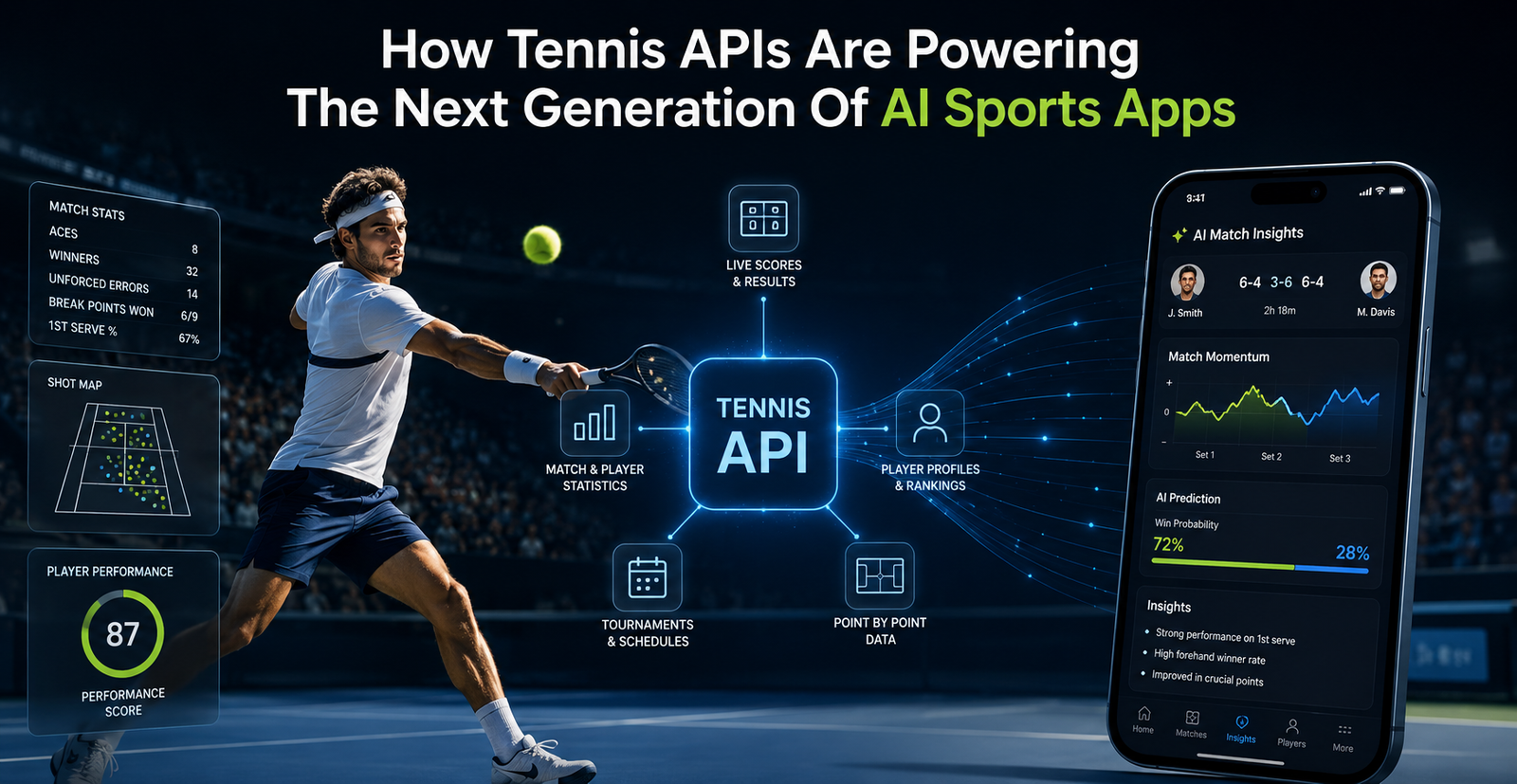
AI is changing the way sports apps are built.
Fans now expect more than basic scores. They want predictions, player comparisons, live insights, automated previews, rankings, form guides and deeper statistics. For developers, this creates a major opportunity, but it also creates a major technical challenge.
AI sports apps are only as good as the data behind them.
For tennis, that means developers need clean, structured and reliable data across ATP, WTA, ITF and Challenger tournaments. They need live scores, historical results, rankings, player profiles, H2H records and surface-based performance data.
This is why the demand for a professional tennis analytics API is growing.
Tennis is one of the best sports for analytics because it produces structured patterns over time. Player form, ranking movement, surface preference, serving performance, opponent history and tournament conditions can all influence outcomes.
However, collecting and organising this information manually is difficult.
Many early-stage sports apps try to rely on scraped data or free public sources. That may work for a small test project, but it becomes limiting when the product needs to scale.
Common issues include:
• Incomplete match history
• Delayed live scores
• Missing lower-tier tournaments
• Inconsistent player names
• Broken data feeds
• Weak rankings history
• No proper H2H structure
• High maintenance costs
AI systems need consistency. If the data is unreliable, the predictions and insights become unreliable as well.
A professional tennis API solves this by giving developers structured access to the data they need.
The Matchstat Tennis API is built for developers, sportsbooks, media companies, analytics tools, AI projects and automated sports content platforms. It combines live tennis data with historical databases, rankings, H2H analytics, player statistics and prediction-ready datasets.
This makes it useful for building:
• AI tennis prediction tools
• Live score apps
• Betting analytics dashboards
• Tennis content automation systems
• Player comparison tools
• Mobile sports apps
• Tournament hubs
• Fantasy tennis platforms
• Match preview engines
One of the biggest advantages is depth.
A lightweight score feed may tell you who is playing and what the current score is. A stronger API can help explain context. That context could include previous meetings, recent form, surface records, rankings, player history and tournament performance.
For AI sports apps, this extra context matters.
A prediction model does not just need today’s match. It needs years of structured historical results. It needs clean player data. It needs surface splits. It needs H2H records. It needs reliable identifiers and stable endpoints.
That is why a structured tennis data provider is far more valuable than a simple scoreboard feed.
The Matchstat ecosystem also has a real-world usage advantage. Its infrastructure powers existing tennis platforms including Matchstat.com and Stevegtennis.com. This gives the product more credibility because it is already connected to live tennis websites, statistical systems and automated tennis content.
For developers who want to test integration, the API is also available through the RapidAPI tennis API listing. This makes it easier to experiment with endpoints, check responses and build early-stage prototypes before scaling.
Another useful area is automated sports content.
Sports publishers can use tennis APIs to generate match previews, daily schedules, ranking pages, tournament pages, H2H comparison pages and player profiles. This can reduce manual editorial work while increasing the amount of useful content available to fans.
For example, a sports website could automatically create pages around:
• Upcoming tennis matches
• ATP and WTA rankings
• Player vs player history
• Surface-specific trends
• Recent form
• Tournament schedules
• Prediction insights
This type of automation is becoming more important as sports media companies compete for traffic, engagement and faster publishing.
The future of sports apps will be built around data. AI can help interpret that data, but the foundation still needs to be accurate, structured and scalable.
For tennis developers, that means choosing infrastructure that can support live scores, historical results, rankings, H2H analytics and prediction models in one connected system.
A reliable tennis API is no longer just a backend feature. It is becoming the foundation for the next generation of AI sports products.

Understanding AI Agent Architecture: From Automation to Autonomous Intelligence

How DMCA Ignored Hosting Help Adult Content Sites?

Other Alternatives to the Bigbunny Login Casino
Web UI Design Services, Custom Web App Development, or Local Product Design: Where to Start

Type-C to C vs Type A to Type C Cable: What’s the Difference?

How Executive Search Software Selects and Manages Senior Leadership Candidates

Data Science Course in Pune with Placement Support: From Classroom Training to Your First Job

Ethical Hacking Courses in Mumbai with Placement: Institutes, Duration, Fees & Jobs 2026

Best Micro Influencer Agency Singapore: Why Micro Beats Macro for Conversion

What Makes a Crypto Exchange Top-Rated? Understanding the Ranking Criteria
Web UI Design Services, Custom Web App Development, or Local Product Design: Where to Start
How Executive Search Software Selects and Manages Senior Leadership Candidates
Other Alternatives to the Bigbunny Login Casino
Type-C to C vs Type A to Type C Cable: What’s the Difference?
How DMCA Ignored Hosting Help Adult Content Sites?
Understanding AI Agent Architecture: From Automation to Autonomous Intelligence


 Tech2 years ago
How to Use a Temporary Number for WhatsApp
- Business3 years ago
Sepatuindonesia.com | Best Online Store in Indonesia
- Social Media2 years ago
The Best Methods to Download TikTok Videos Using SnapTik
- Technology2 years ago
Top High Paying Affiliate Programs
- Tech2 years ago
Understanding thejavasea.me Leaks Aio-TLP: A Comprehensive Guide
- FOOD2 years ago
How to Identify Pure Desi Ghee? Ultimate Guidelines for Purchasing Authentic Ghee Online

 Instagram4 years ago
Free Instagram Auto Follower Without Login
- Instagram4 years ago
Free Instagram Follower Without Login