
Blog
How Articulated Joints Improve Motion Control in Modern Machinery

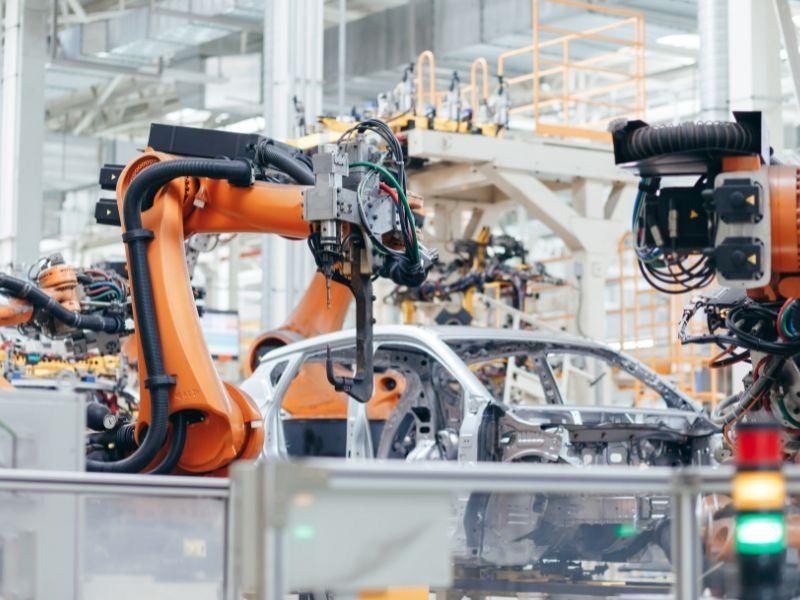
Watch a six-axis industrial robot weld a car chassis seam. The arm moves through space with a kind of fluid precision that looks effortless — looping, rotating, holding position under load without a tremor. What makes that possible isn’t the servo motors or the control software alone. It’s the joints. Specifically, it’s the geometry, material, and configuration of every articulated joint in that kinematic chain.
Articulated joints are not passive hardware. They define where motion is permitted, where load is transferred, and where energy is absorbed or wasted. Every degree of freedom you build into a joint is a degree of freedom you need to control — and every one you leave uncontrolled becomes a source of error, wear, or failure. In that sense, joint selection isn’t a procurement decision. It’s a motion control design decision made at the mechanical level.
The Core Mechanics: Degrees of Freedom and Load Transfer
What Articulated Joints Actually Do
The fundamental job of any articulated joint is to transmit load while permitting controlled motion. A rigid bolted connection transmits load but permits no motion. A loose pivot transmits motion but manages load poorly. Articulated joints sit in between — and the engineering challenge is holding that balance under real operating conditions.
Ball joints operate with three rotational degrees of freedom. The ball-and-socket geometry allows rotation about three axes simultaneously, which is what makes them essential wherever multi-axis angular movement and misalignment compensation are both required. Revolute joints, by contrast, give you exactly one degree of freedom per joint — one controlled rotation. That single-axis constraint is precisely their value in industrial robotics, where a 6-axis arm chains six revolute joints together to build a cumulative workspace that covers virtually any orientation in three-dimensional space.
The choice between ball and revolute isn’t about which is “better.” It’s about what motion the application actually requires — and what motion it cannot afford to tolerate.
Misalignment Compensation: The Hidden Value
In real machinery, shaft axes are almost never perfectly aligned. Manufacturing tolerances stack up. Frames flex under load. Thermal expansion shifts component positions during operation. If your joints can’t absorb that misalignment, stress concentrates at the connection point and fatigue failure accelerates.
Spherical joint geometry distributes misalignment across the bearing surface rather than forcing it into the shaft or housing. The result is more even load distribution, reduced bending stress at the joint interface, and longer service life under dynamic loads. In high-precision applications — aerospace actuators, coordinate measuring equipment, medical robotics — misalignment compensation capacity becomes a critical specification parameter. The higher your precision requirement, the more carefully joint selection needs to account for misalignment behavior under the full operating load envelope.
Radius Rods and Linkage Control
Why Linkage Geometry Matters
A joint doesn’t perform in isolation. Its behavior depends entirely on the linkage system it belongs to — the geometry, the constraint pattern, the load paths through adjacent components. This is where many mechanical designs underestimate complexity.
The radius rod is a straightforward example of how a single linkage component defines motion behavior across an entire axle assembly. In heavy vehicles and construction equipment, the radius rod controls longitudinal motion of the axle relative to the chassis. Under hard braking, it resists the forward-diving force. Under heavy acceleration, it prevents axle wind-up — the rotational torque reaction that, left uncontrolled, disrupts driveline angles, causes wheel-hop, and accelerates wear on pinion seals and universal joints. In agricultural and construction equipment operating under high torque and frequent load reversals, radius rod failure modes — bushing wear, rod bend, end-joint separation — are among the most common causes of unplanned downtime.
Precision Through Constraint
The principle is straightforward: constraining unnecessary degrees of freedom improves controllability. If your application requires axle movement in one plane only, every additional direction of freedom you leave available is a potential error source.
The choice of joint end on a radius rod — rubber bushing versus spherical end joint — directly determines precision. A rubber bushing absorbs vibration and tolerates angular misalignment, but it introduces compliance, meaning the effective linkage length shifts slightly under load. A spherical end joint is stiffer, transfers load more directly, and provides more precise axle positioning — at the cost of higher vibration transmission and more demanding installation alignment. Neither is universally correct. The right answer depends on whether your priority is ride isolation or geometric precision under load.
Material Selection and Environmental Fit
Steel, Stainless Steel, and Aluminum — Not Just About Strength
Material selection for articulated joints is routinely oversimplified into a strength conversation. Tensile rating, yield strength, hardness — these matter, but they’re baseline requirements. The more consequential variable in most field applications is environmental resistance, and that’s where carbon steel, stainless steel, and aluminum alloys separate into genuinely different use cases.
Carbon steel delivers high strength at low cost and remains the default for indoor, controlled-environment applications where surface coatings can be maintained. Corrosion is where it struggles. In a wet or chemically active environment, carbon steel doesn’t just rust cosmetically — it loses cross-sectional area at the joint interface, introduces play into the bearing surface, and eventually causes the joint to fail at loads well below its rated capacity.
Stainless steel costs more upfront and is harder to machine. In wet, saline, or chemical environments, it’s the only rational choice. For corrosion-resistant ball joints in those conditions, the specifics matter: standard Grade 316 provides chloride resistance primarily through its molybdenum content, while 316L’s low-carbon formulation is specifically beneficial when the component involves welding — reducing the risk of carbide precipitation at heat-affected zones. For machined joints, either grade performs well in aggressive environments; the choice comes down to the manufacturing process.
Aluminum alloys fill a specific niche: applications where weight is the dominant constraint. Motorsport suspension linkages and aerospace actuator joints use aluminum where mass savings justify the trade-offs. The real limitation isn’t raw compressive strength — it’s fatigue life. Unlike steel, aluminum has no defined endurance limit, meaning it will eventually fail under cyclic loading regardless of stress amplitude. For high-cycle, impact-prone applications, that’s the constraint that matters.
When Corrosion Kills Performance
In marine equipment, food processing machinery, and outdoor construction, corrosion is consistently the leading cause of premature joint failure. It is rarely overload or mechanical fatigue that ends a component’s life, but rather the material degradation that begins the moment coating integrity is compromised. While surface treatments like zinc plating, phosphating, or polymer coatings can extend service life, they are not a substitute for proper base material selection.
The reality of the field is that a zinc-plated carbon steel joint in a marine environment will fail far faster than an uncoated Grade 316 stainless equivalent. This discrepancy exists because coatings demand strict maintenance compliance to remain effective, whereas a high material grade does not. For joints in inaccessible locations or equipment with long service intervals, the lifecycle math consistently favors stainless steel construction.
Engineers who specify carbon steel with “adequate coating” in corrosive environments are transferring cost from the capital budget to the maintenance budget. The joint is cheaper at purchase. The total cost of ownership calculation rarely survives past the second field season.
Industry Applications: From Robotics to Heavy Equipment
The range of environments where articulated joint performance determines system capability is wider than most people assume.
In industrial robotics, the 6-axis revolute joint architecture has become the dominant configuration for manipulators precisely because each joint adds exactly one degree of freedom in a predictable, controllable way. Stack six of them and you get the full rotational workspace needed to reach any point and orientation within the robot’s envelope. Joint preload, backlash specification, and bearing selection at each axis directly determine positioning repeatability — the ability to return to the same position consistently. Actual accuracy (reaching a specific coordinate in space) depends additionally on the control model compensating for joint deflection and link compliance. According to engineering resources from IEEE Spectrum’s robotics coverage, joint compliance and mechanical play remain the primary limiting factors in sub-millimeter precision robotic applications, even with closed-loop control.
Heavy construction machinery pushes articulated joints to the opposite extreme. A hydraulic excavator’s boom, arm, and bucket system operates under impact loads, continuous vibration, abrasive contamination, and extreme force reversals — all simultaneously. Here, the spherical joint’s load distribution advantage is at its most valuable, because a rigid connection would either crack under dynamic load or require oversizing to impractical dimensions.
While revolute joints provide the controlled, single-axis motion pathway that gives industrial robots their precision, spherical joints provide the angular flexibility that structural linkages in heavy machinery need to survive irregular loading. These aren’t competing design philosophies — they serve different mechanical objectives.
Agricultural machinery adds its own set of failure conditions: dust infiltration into bearing surfaces, mud packing around seals, temperature cycling between cold mornings and hot afternoons, and UV degradation of elastomeric components. In this environment, sealing design matters as much as material selection. The difference between a shielded joint and one equipped with triple-lip seals or integral boots can translate to several hundred additional service hours before maintenance is required. A joint rated for 1,000-hour service intervals is operationally different from one requiring 200-hour inspections, even when their static load ratings are identical. Engineering databases such as GlobalSpec provide comparative data on sealing configurations and load ratings for spherical rod end bearings across different industrial grades.
Off-road and motorsport suspension systems represent a fourth distinct context. Joints must maintain geometric precision through travel ranges often exceeding 200mm of vertical wheel movement while managing lateral, longitudinal, and vertical loads simultaneously. The kinematic analysis of how joint angles change through travel determines whether the vehicle handles predictably or develops instability at the limits of suspension range.
Choosing the Right Joint: A Practical Framework
Four questions drive every useful joint selection conversation:
What directions of motion does this connection need to permit — and which must it prevent?
What load types will the joint carry: static, dynamic, impact, or combined?
What is the operating environment: temperature range, contamination exposure, moisture and chemical contact?
What lubrication strategy is practical: maintenance-free PTFE-lined joints, or periodic greasing?
Working through those questions in sequence produces a logical decision path. Multi-axis rotation with misalignment compensation: start with a spherical or ball joint. Precise single-axis control: a revolute joint with tightly specified backlash. Longitudinal force management and axle stability in a heavy drivetrain: a radius rod linkage with appropriately selected end joints. Corrosive environment: stainless steel or a specifically rated corrosion-resistant material is not optional — it’s the foundation from which everything else is specified.
On lubrication: PTFE-lined maintenance-free joints reduce operational overhead and work well in applications where re-lubrication is difficult or intervals are long. Greasable joints offer better contamination flush-out in heavily soiled environments but require a reliable maintenance schedule. Getting this choice wrong adds cost either through early replacement or through the labor burden of frequent servicing.
The most common specification error is optimizing for upfront cost rather than lifecycle cost. A carbon steel joint at half the price of a stainless equivalent looks like an obvious saving until you factor in two early replacements, associated labor, equipment downtime, and lost production. Load analysis comes first. Material selection follows from the environment. Full lifecycle cost — including maintenance access, service intervals, and replacement complexity — closes the decision.
Articulated joints don’t just enable motion. Specified correctly, they enforce the motion boundaries your application requires while surviving the environment it actually operates in. That combination of controlled permission and intelligent constraint, across the full service life, is what mechanical-level motion control looks like in practice.

Understanding AI Agent Architecture: From Automation to Autonomous Intelligence

How DMCA Ignored Hosting Help Adult Content Sites?

Other Alternatives to the Bigbunny Login Casino
Web UI Design Services, Custom Web App Development, or Local Product Design: Where to Start

Type-C to C vs Type A to Type C Cable: What’s the Difference?

How Executive Search Software Selects and Manages Senior Leadership Candidates

Data Science Course in Pune with Placement Support: From Classroom Training to Your First Job

Ethical Hacking Courses in Mumbai with Placement: Institutes, Duration, Fees & Jobs 2026

Best Micro Influencer Agency Singapore: Why Micro Beats Macro for Conversion

What Makes a Crypto Exchange Top-Rated? Understanding the Ranking Criteria
Web UI Design Services, Custom Web App Development, or Local Product Design: Where to Start
How Executive Search Software Selects and Manages Senior Leadership Candidates
Other Alternatives to the Bigbunny Login Casino
Type-C to C vs Type A to Type C Cable: What’s the Difference?
How DMCA Ignored Hosting Help Adult Content Sites?
Understanding AI Agent Architecture: From Automation to Autonomous Intelligence


 Tech2 years ago
How to Use a Temporary Number for WhatsApp
- Business3 years ago
Sepatuindonesia.com | Best Online Store in Indonesia
- Social Media2 years ago
The Best Methods to Download TikTok Videos Using SnapTik
- Technology2 years ago
Top High Paying Affiliate Programs
- Tech2 years ago
Understanding thejavasea.me Leaks Aio-TLP: A Comprehensive Guide
- FOOD2 years ago
How to Identify Pure Desi Ghee? Ultimate Guidelines for Purchasing Authentic Ghee Online

 Instagram4 years ago
Free Instagram Auto Follower Without Login
- Instagram4 years ago
Free Instagram Follower Without Login