
Blog
ACCA Syllabus 2026: Changes and Career Options

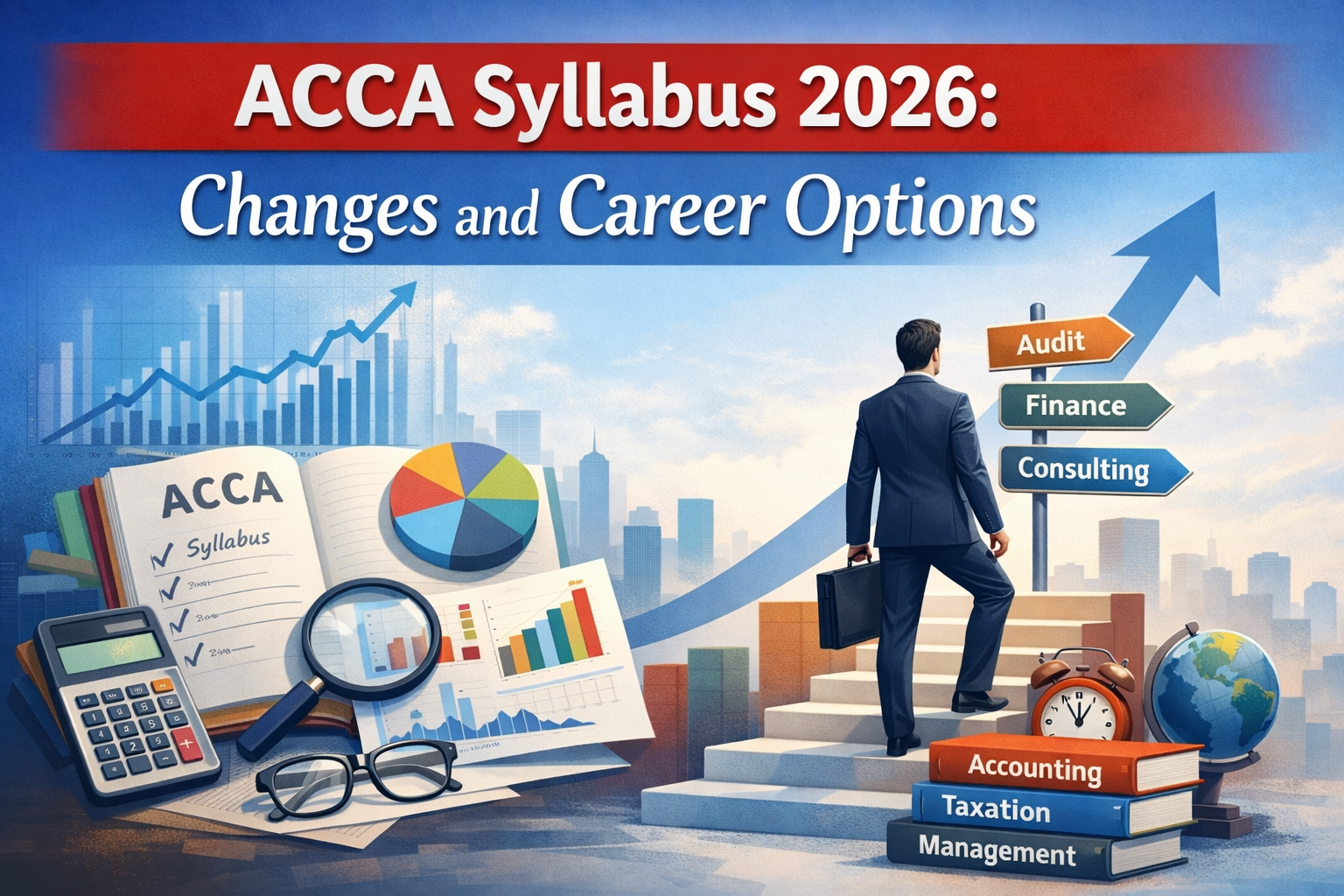
Global finance markets move fast as tech growth and green rules take hold. For those starting out in 2026, the path sits between older rules and a new way to qualify. Doing well takes more than just repeating facts. It takes a quick mind ready to see how numbers and planet-care goals run a firm. The current ACCA syllabus measures a candidate’s skill in turning raw numbers into practical commercial strategies.
Students navigating the ACCA course today find themselves at a crossroads. While the core pillars of accounting remain, the application of these principles now mirrors a world where artificial intelligence and ethical transparency take center stage. This guide maps out the specific updates, exam shifts, and preparation tactics needed to clear the hurdles of the 2026 sessions.
The 2026 Transition: A Bridge to the Future
The Association of Chartered Certified Accountants (ACCA) recently signaled its most ambitious redesign in decades, titled “Accountancy Redefined.” While the full-scale structural overhaul, including the renaming of levels and the reduction of exam counts, is slated for September 2027, the groundwork is being laid right now.
Students sitting for exams in 2026 are following the 2025/26 study guides. These guides serve as a precursor to the 2027 changes. Those who start their journey now will likely face a hybrid experience. They will begin under the current thirteen-exam model but might complete their final professional papers under the new “Expertise” and “Strategic” designations.
Decoding the 2026 ACCA Subjects
The journey remains divided into three distinct stages, each building on the last to create a well-rounded professional. Mastering the specific ACCA subjects requires a clear roadmap of what each level expects from a candidate.
Applied Knowledge Level
This foundational stage sets the pace. It covers the basics of how businesses operate and how financial data is recorded.
- Business and Technology (BT): Focuses on the corporate environment and the role of digital tools.
- Management Accounting (MA): Revolves around calculating production overheads and setting annual spending limits.
- Financial Accounting (FA): Teaches you about the mechanics of double-entry records and the assembly of financial reports.
Applied Skills Level
This stage requires candidates to map accounting mechanics against the friction of regional laws and live case studies.
- Corporate and Business Law (LW): Candidates learn the legal systems that govern contracts and the formation of business entities.
- Performance Management (PM): Students use cost data to set targets and track the success of specific business plans.
- Taxation (TX): Candidates calculate specific tax payments for citizens and businesses by applying the latest legislative statutes.
- Financial Reporting (FR): This paper focuses on drafting accurate statements for single entities and corporate groups using the IFRS framework.
- Audit and Assurance (AA): Students pinpoint potential risks in financial records and perform the specific checks needed to verify company ledgers.
- Financial Management (FM): This subject measures how students price potential projects and secure the capital required for business growth.
Strategic Professional Level
The final hurdle tests leadership and specialized expertise. Students must clear two mandatory papers and select two options that align with their career goals. This level is where the most modern shifts in the ACCA syllabus are currently visible.
Technical Updates for 2026: What’s New?
Preparation for 2026 requires staying current with specific accounting standard changes and thematic shifts. The exam team has moved away from static questions toward scenario-based assessments that mimic a modern office environment.
1. The IFRS 18 Shift
The acca syllabus for 2026 adopts IFRS 18, which removes the old IAS 1 rules for financial statement layouts. This update requires students in the FR and SBR modules to group income and expenses into specific operating, investing, and financing categories. The shift creates a uniform standard across global industries. Exam markers will deduct points from anyone who continues to use the previous reporting templates during the 2026 sessions.
2. ESG and Sustainability Reporting
Environmental, Social, and Governance (ESG) metrics are no longer “extra” reading. They are now embedded into the core of Strategic Business Reporting (SBR) and Strategic Business Leader (SBL). In 2026, expect questions that ask you to link financial performance with carbon footprint disclosures or ethical supply chain management. The “green” thread runs through almost every paper at the professional level.
3. Digital Proficiency and AI
The 2026 ACCA subjects reflect a world where accountants act as data storytellers. Audit and Assurance (AA) now places more weight on IT system audits and the use of automated tools for evidence collection. Instead of basic variance math, PM exams now require candidates to pull actionable logic from large-scale data sets.
Strategic Preparation for 2026 Candidates
Passing these exams requires a shift in study habits. The 2026 sessions continue the trend of strictly center-based exams, as remote options have been phased out in most regions.
Master the CBE Environment
The Computer-Based Exam (CBE) platform is your primary tool. Students must become proficient in the spreadsheet and word-processing functions built into the ACCA interface. In 2026, the marking schemes reward the clear presentation of data. A correct answer buried in a messy spreadsheet may not gain full marks.
Integrate Ethics Early
The Ethics and Professional Skills Module (EPSM) is a prerequisite for many students before they move to the Strategic level. In 2026, this module is even more vital as it prepares you for the “Professional Skills” marks now awarded in all Strategic Professional papers. These marks – often 20% of the total are given for skepticism, commercial acumen, and communication.
Cross-Subject Synergies
In 2026, successful students are those who see the links between ACCA subjects. For example:
- The data analysis skills learned in PM directly support the investment decisions in FM.
- Financial Reporting (FR) knowledge is the bedrock for Audit and Assurance (AA).
- SBR and SBL should ideally be taken close together, as they both rely heavily on integrated thinking.
Looking Toward the 2027 Redesign
While 2026 students are under the current structure, they must keep an eye on the “Accountancy Redefined” timeline. If you plan to finish your qualification by 2028, you will likely transition into the new system.
| Current Structure (2026) | Future Structure (September 2027) |
| Applied Knowledge Level | Knowledge Level |
| Applied Skills Level | Expertise Level (5 exams instead of 6) |
| Strategic Professional (4 exams) | Strategic Professional (3 exams) |
| Ethics & Professional Skills Module | Three Employability Modules |
Starting in 2026 is a safe bet. ACCA has confirmed a “no-loss” transition policy. Any paper you pass under the current ACCA syllabus will grant you an automatic exemption in the new structure. In fact, students starting in 2026 might find themselves in an advantageous position, completing foundational work now and benefiting from the streamlined exam count at the professional level later.
Final Tactics for 2026 Success
The 2026 candidate must be a researcher as much as a student. Relying on textbooks from 2024 is a recipe for failure. Ensure your materials are specifically tagged for the September 2025 – June 2026 window.
Pay close attention to the “Examiner’s Reports.” These documents are goldmines, detailing exactly where previous cohorts stumbled. In recent sessions, the biggest hurdle wasn’t a lack of technical knowledge but a failure to apply that knowledge to the specific business scenario provided in the prompt.
Modern finance roles look different now. Mastering these acca subjects through the lens of tech fluency and moral standards does more than secure a passing grade. It constructs a professional foundation capable of surviving market shifts and automation.

Understanding AI Agent Architecture: From Automation to Autonomous Intelligence

How DMCA Ignored Hosting Help Adult Content Sites?

Other Alternatives to the Bigbunny Login Casino
Web UI Design Services, Custom Web App Development, or Local Product Design: Where to Start

Type-C to C vs Type A to Type C Cable: What’s the Difference?

How Executive Search Software Selects and Manages Senior Leadership Candidates

Data Science Course in Pune with Placement Support: From Classroom Training to Your First Job

Ethical Hacking Courses in Mumbai with Placement: Institutes, Duration, Fees & Jobs 2026

Best Micro Influencer Agency Singapore: Why Micro Beats Macro for Conversion

What Makes a Crypto Exchange Top-Rated? Understanding the Ranking Criteria
Web UI Design Services, Custom Web App Development, or Local Product Design: Where to Start
How Executive Search Software Selects and Manages Senior Leadership Candidates
Other Alternatives to the Bigbunny Login Casino
Type-C to C vs Type A to Type C Cable: What’s the Difference?
How DMCA Ignored Hosting Help Adult Content Sites?
Understanding AI Agent Architecture: From Automation to Autonomous Intelligence


 Tech2 years ago
How to Use a Temporary Number for WhatsApp
- Business3 years ago
Sepatuindonesia.com | Best Online Store in Indonesia
- Social Media2 years ago
The Best Methods to Download TikTok Videos Using SnapTik
- Technology2 years ago
Top High Paying Affiliate Programs
- Tech2 years ago
Understanding thejavasea.me Leaks Aio-TLP: A Comprehensive Guide
- FOOD2 years ago
How to Identify Pure Desi Ghee? Ultimate Guidelines for Purchasing Authentic Ghee Online

 Instagram4 years ago
Free Instagram Auto Follower Without Login
- Instagram4 years ago
Free Instagram Follower Without Login