Blog
Faux Olive Tree vs Real Olive Tree: Which Adds More Value to Your Space?

Choosing between a Faux Olive Tree and a real olive tree can be a pivotal decision for any home decor enthusiast. While both options have their unique appeal, understanding which adds more value to your space involves analyzing various factors such as maintenance, aesthetics, and cost. Whether you’re a Product Sourcing Agent seeking the perfect piece for a client’s home or someone interested in refining your own space, this article will guide you through the key considerations. We’ll explore the benefits of each option, compare their maintenance requirements, and assess which might offer more aesthetic and financial value.
Faux Olive Tree: A Stylish Alternative for Any Space
For those involved in Mood Board Creation and Visual Merchandising Strategy, the Faux Olive Tree represents a versatile and stylish alternative. These trees offer the benefit of perfect greenery without the need for sunlight or water, making them ideal for spaces with limited natural light. According to a recent study, faux plants are becoming increasingly popular, with the industry seeing a substantial rise in sales over the past few years (Source: Statista, 2023).
Another advantage of faux trees is their consistency in appearance, which is crucial when planning a Retail Space Optimization. The leaves of a faux tree remain vibrant year-round, ensuring that your design stays exactly as intended without the seasonal variations that real plants undergo. Additionally, the use of advanced Fabrication Techniques in creating faux trees ensures high-quality, lifelike products that enhance any space they occupy.
If you’re considering adding a Faux Olive Tree to your decor, options like the Faux Olive Tree from Nearly Natural are crafted to meet high standards and bring enduring beauty to your home or office.
Real Olive Tree: A Touch of Nature’s Authenticity
Incorporating a real olive tree into a space can significantly enhance its natural ambiance. For those who appreciate the authenticity of living plants, a real olive tree offers unmatched beauty and a connection to nature. This choice often appeals to clients during a Home Staging Consultation, where the goal is to create a warm and inviting atmosphere.
Real olive trees contribute to better air quality and can evoke a calming presence, which is beneficial in settings focused on relaxation and tranquility. However, it’s essential to consider the tree’s needs, such as adequate sunlight and regular watering, to maintain its health and appearance. This can be a significant factor in the Procurement Cycle for agencies considering live plants for large projects.
While the aesthetic benefits are immense, integrating real plants into your design requires a keen understanding of Colorway Development and Fixture Layout Planning, ensuring that the tree complements other elements in the space.
Comparing Maintenance and Care for Faux and Real Olive Trees
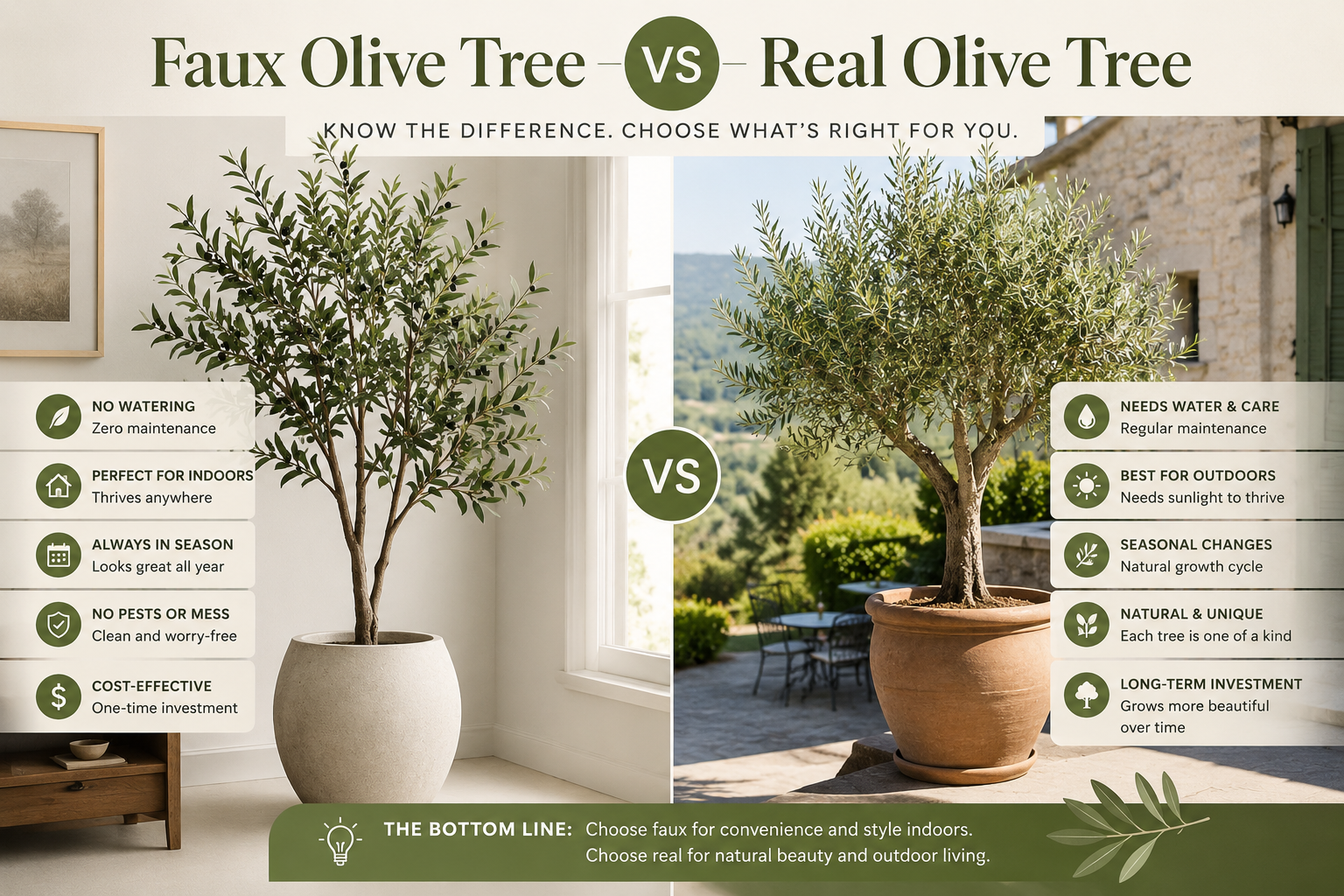
When choosing between a faux and a real olive tree, maintenance and care are crucial considerations. Faux trees require minimal upkeep, a significant advantage for those with busy schedules or limited gardening expertise. This aspect is particularly appealing in environments where consistency and low maintenance are priorities, such as in Trade Show Representation or in seasonal setups where ease of use is paramount.
In contrast, real olive trees demand regular attention, including watering, pruning, and pest control. Agencies involved in Vendor Compliance Audit often prefer to ensure that clients are ready to commit to this level of care. However, for those who enjoy gardening, the routine can be a rewarding aspect of having a living tree in their space.
Understanding the Inventory Turnover Ratio in retail or residential projects can help determine whether the investment in real plant care is justified by the benefits they provide to a space’s ambiance and health.
Evaluating the Aesthetic and Financial Value of Each Option
In terms of aesthetics, both faux and real olive trees offer unique benefits. Faux trees provide a consistent look, which can be crucial in Design Brief Documentation, ensuring that visual goals are achieved regardless of environmental changes. These trees are particularly beneficial in spaces where uniformity is key, such as in corporate or retail settings.
Financially, faux trees often represent a lower long-term investment, as they do not require the ongoing expenses associated with real plant care. This is an important consideration in Seasonal Merchandising Calendar planning, where budget constraints can impact design choices.
Ultimately, the choice between a faux and a real olive tree should align with the specific goals of the space and the client’s preferences. Whether it’s the steadfast beauty of a Faux Olive Tree or the dynamic presence of a real one, each option has distinct advantages that can enhance your home decor strategy.
Conclusion
When deciding between a faux and a real olive tree, consider the balance of aesthetics, maintenance, and cost. Each type offers unique benefits tailored to different needs and preferences. By evaluating these aspects, you can choose the option that best enhances your environment, ensuring that your space not only looks beautiful but also aligns with your lifestyle and design objectives.



TrendyTech’s Data Engineer Training: Build Skills for a Successful Career

Why FastTurnPCBs Matters for High-Frequency PCB Projects

CurlyMe Hair Half Wigs & Crochet Hair For Summer Protective Style
5 Simple CNC Tooling Choices That Improve Shop Efficiency
How Trading Apps Are Shaping the Future of Retail Investing

Migrating from Prometheus to VictoriaMetrics: A Step-by-Step Guide

How Journalists and News Researchers Stay on Top of Multi-Region Coverage in 2026

How Primary 5 Maths Tuition Helps Prevent Careless Math Mistakes
O Level Chemistry Book Excellence: How SAP Helps Students Prepare with Confidence

Low efficiency in small-batch production Smart manufacturing and automation solutions help you cut costs by 30%.
Low efficiency in small-batch production Smart manufacturing and automation solutions help you cut costs by 30%.
How Journalists and News Researchers Stay on Top of Multi-Region Coverage in 2026
O Level Chemistry Book Excellence: How SAP Helps Students Prepare with Confidence
How Primary 5 Maths Tuition Helps Prevent Careless Math Mistakes
CurlyMe Hair Half Wigs & Crochet Hair For Summer Protective Style
5 Simple CNC Tooling Choices That Improve Shop Efficiency
Migrating from Prometheus to VictoriaMetrics: A Step-by-Step Guide
How Trading Apps Are Shaping the Future of Retail Investing
Why FastTurnPCBs Matters for High-Frequency PCB Projects
TrendyTech’s Data Engineer Training: Build Skills for a Successful Career


 Tech2 years ago
How to Use a Temporary Number for WhatsApp
- Business2 years ago
Sepatuindonesia.com | Best Online Store in Indonesia
- Social Media2 years ago
The Best Methods to Download TikTok Videos Using SnapTik
- Technology2 years ago
Top High Paying Affiliate Programs
- Tech1 year ago
Understanding thejavasea.me Leaks Aio-TLP: A Comprehensive Guide
- FOOD2 years ago
How to Identify Pure Desi Ghee? Ultimate Guidelines for Purchasing Authentic Ghee Online

 Instagram4 years ago
Free Instagram Auto Follower Without Login
- Instagram4 years ago
Free Instagram Follower Without Login