
Blog
Strength Training Anatomy: Complete Guide for Every Lifter

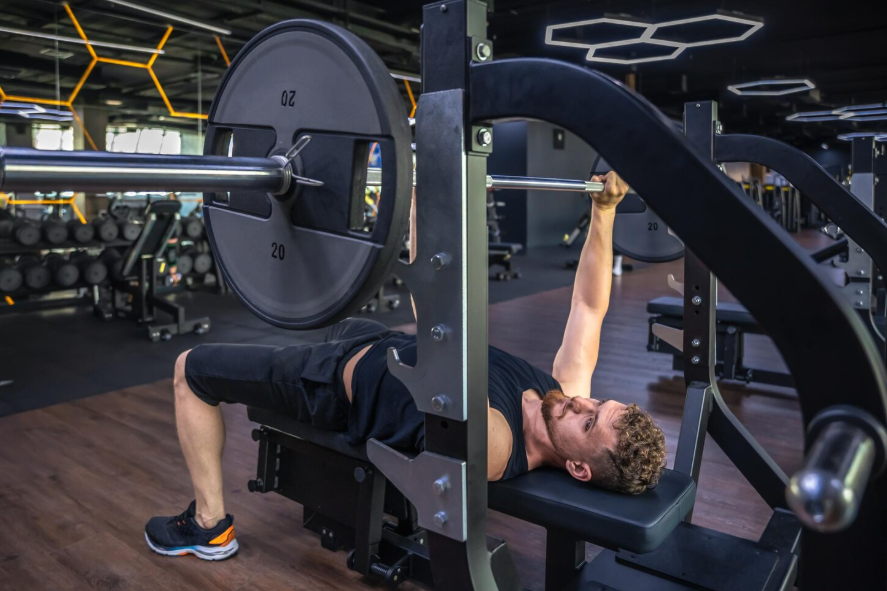
Understanding how your body works during exercise is one of the most powerful tools you can have in fitness. Strength training anatomy is the study of muscles, joints, and body mechanics as they relate to lifting weights and building strength. When people hit the gym, they often focus only on routines or equipment, but knowing what happens under the skin can transform the way you train. It helps you target muscles more effectively, prevent injuries, and maximize performance.
This comprehensive article explores everything you need to know about strength training anatomy, from the basic muscle groups and their functions to the role of joints, ligaments, and tendons. It also highlights how anatomy knowledge influences training plans, recovery, and performance for both beginners and advanced athletes.
Why Strength Training Anatomy Matters
Many people approach fitness by following generic routines, but every exercise involves specific muscles working in coordination. Knowing strength training anatomy allows you to select exercises that match your goals. If you want stronger legs, you need to know the role of quadriceps, hamstrings, and glutes. If your goal is a defined upper body, then you must understand how the chest, shoulders, and arms contribute to different pushing and pulling movements.
Without anatomy knowledge, workouts can become unbalanced, overtraining some muscles while neglecting others. This imbalance often leads to poor posture, plateaus, or even injuries. Anatomy gives you the blueprint to design smarter and safer training programs.
The Skeletal System and Strength Training
Bones provide the rigid framework of the body, and they serve as attachment points for muscles. During strength training, bones act as levers, and joints act as pivots that allow movement. For example, the elbow joint functions as a hinge, letting the triceps and biceps move the forearm up and down. Understanding these lever systems helps explain why certain exercises feel harder than others and why technique is critical.
Bone density also improves with resistance training. This is especially important for older adults, as it reduces the risk of osteoporosis. Anatomy teaches us that strength training isn’t just about muscles; it reinforces the skeletal system too.
Major Muscle Groups in Strength Training Anatomy
The human body contains more than 600 muscles, but strength training focuses primarily on major groups. Each group has a unique role, and learning their anatomy ensures more effective workouts.
Chest Muscles
The chest is primarily made up of the pectoralis major and minor. These muscles are responsible for pushing movements such as bench presses, push-ups, and chest flys. The pectoralis major is divided into upper and lower fibers, which explains why incline and decline presses target different areas. Strength training anatomy helps lifters understand how small changes in angle shift muscle activation.
Back Muscles
The back includes the latissimus dorsi, trapezius, rhomboids, and erector spinae. These muscles stabilize the spine and power pulling motions such as rows, pull-ups, and deadlifts. The latissimus dorsi creates the classic “V-shape” of a strong back, while the erector spinae maintains posture. A well-balanced back routine ensures both strength and spinal health.
Shoulder Muscles
The shoulder joint is highly mobile but also vulnerable to injury. The deltoid muscle covers the shoulder and is divided into anterior, lateral, and posterior sections. Each section activates differently depending on the exercise. Overhead presses build strength in the front and side delts, while reverse flys strengthen the rear delts. Proper training based on anatomy keeps the shoulders strong and stable.
Arm Muscles
The arms are often the most visibly trained part of the body. The biceps brachii on the front of the arm control elbow flexion, while the triceps brachii on the back handle extension. The forearm muscles manage grip strength and wrist stability, crucial for pulling exercises and heavy lifts. Anatomy teaches that arm development is not only about curls or triceps pushdowns but also about strengthening forearms for functional grip power.
Core Muscles
The core is more than just visible abdominals. It includes the rectus abdominis, obliques, transverse abdominis, and deeper stabilizing muscles like the multifidus. These muscles protect the spine, transfer force between upper and lower body, and maintain posture. Exercises like planks, deadlifts, and rotational movements highlight the importance of a strong core. Anatomy proves that a strong core isn’t just aesthetic—it is functional for every movement.
Leg Muscles
The legs are the foundation of the body and involve multiple large muscle groups. The quadriceps extend the knee, the hamstrings flex it, and the gluteus maximus drives hip extension. The calves assist with plantar flexion, while smaller stabilizers maintain balance. Squats, lunges, and deadlifts engage all of these muscles. Strength training anatomy helps lifters understand why lower-body training is essential for overall strength and athleticism.
Joints in Strength Training Anatomy
Muscles alone don’t create movement; joints play a vital role. Each joint type allows specific motions. The shoulder is a ball-and-socket joint that provides wide mobility but less stability, while the knee is a hinge joint designed for stability with limited range. Understanding how joints function prevents improper loading. For example, locking out knees during leg presses can stress ligaments, while excessive shoulder rotation can cause impingement. Proper technique ensures joint health for long-term training.
Ligaments and Tendons
Ligaments connect bone to bone, while tendons connect muscle to bone. They are critical in stabilizing movements and transmitting force. Unlike muscles, these tissues adapt more slowly to training. Overloading them too quickly can cause injury. Knowing anatomy encourages gradual progression, proper warm-ups, and flexibility training to protect these supporting structures.
Breathing and Anatomy in Strength Training
Breathing may seem automatic, but it has a direct link to anatomy and strength training. The diaphragm, intercostal muscles, and abdominal wall create intra-abdominal pressure, stabilizing the spine during heavy lifts. The Valsalva maneuver, where you take a deep breath and hold it during a lift, is based on anatomy principles. Proper breathing patterns enhance performance and reduce the risk of injury.
Importance of Balance and Symmetry
Strength training anatomy reveals how muscles work in pairs. Biceps and triceps are antagonists, meaning they perform opposite actions. The same is true for quadriceps and hamstrings. Imbalances between these pairs increase the risk of injury. Training with anatomy in mind ensures balanced development, better posture, and more efficient movement patterns.
Anatomy and Injury Prevention
Many training injuries occur when anatomy is ignored. Overuse of the shoulders without strengthening the rotator cuff can lead to impingement. Excessive forward rounding during deadlifts stresses the lower back. Poor squat mechanics strain the knees. Understanding anatomy helps lifters maintain correct form, identify weak links, and avoid mistakes that lead to long recovery times.
Progressive Overload and Anatomy
Progressive overload—the gradual increase of weight, reps, or intensity—is a cornerstone of strength training. Anatomy explains why muscles grow and adapt under tension. When muscle fibers experience microtears, the body repairs them stronger. However, tendons and ligaments adapt more slowly, which is why progression should be steady. Recognizing anatomical limits prevents pushing too hard, too fast.
Recovery and Muscle Anatomy
Recovery is as much a part of training as lifting. Muscle repair, nervous system recovery, and tissue adaptation occur during rest. Anatomy shows why sleep, hydration, and nutrition are essential for rebuilding fibers. Stretching and foam rolling improve blood circulation, while active recovery keeps joints mobile. Ignoring recovery risks injury and slows progress.
Gender Differences in Strength Training Anatomy
Men and women share the same muscle groups, but differences in anatomy influence training outcomes. Men generally have higher testosterone levels, leading to greater muscle hypertrophy. Women often have better lower-body strength relative to their size and more joint flexibility. Anatomy knowledge helps tailor programs that suit individual physiological differences without relying on myths.
Functional Training and Anatomy
Functional training focuses on movements that mimic real-life activities. Anatomy highlights the importance of training multiple muscle groups together instead of isolating them. Deadlifts, squats, and push-ups recruit entire chains of muscles, improving coordination and balance. Strength training anatomy reminds us that the body functions as a whole, not just as separate parts.
Sports Performance and Anatomy
Athletes in different sports benefit from understanding anatomy to train for their specific demands. Sprinters emphasize explosive leg power, while swimmers focus on lats and shoulders. Fighters need rotational core strength, and rowers rely on back and arm coordination. Anatomy allows athletes to customize strength programs that enhance their sport performance.
Mind-Muscle Connection
One powerful concept in strength training anatomy is the mind-muscle connection. Focusing on contracting the target muscle improves activation and results. Studies show that visualizing a muscle during training can recruit more fibers. Anatomy awareness enhances this connection, making every rep more effective.
Strength Training Anatomy for Beginners
For beginners, anatomy may seem overwhelming, but even basic knowledge helps. Learning which muscles squats target or how push-ups engage the chest provides motivation and direction. Beginners often benefit most from full-body workouts, covering all major muscle groups. Anatomy ensures no group is overlooked, laying the foundation for long-term progress.
Advanced Training and Anatomy

Advanced lifters use anatomy to refine technique and correct weaknesses. For example, targeting the upper chest with incline presses or isolating hamstrings with Romanian deadlifts improves symmetry. Advanced athletes may also focus on weak stabilizers or imbalances revealed by anatomy knowledge. At this level, precision makes the difference between good and great results.
The Future of Strength Training Anatomy
Technology is changing the way we learn anatomy. Apps, 3D models, and wearable sensors now help athletes understand muscle activation in real time. This integration of science and fitness makes anatomy more accessible than ever. As research grows, lifters will continue to benefit from deeper insights into biomechanics and performance.
Conclusion
Strength training anatomy is the foundation of effective fitness. By understanding how muscles, joints, ligaments, and bones work together, lifters can train smarter, avoid injuries, and achieve balanced development. Anatomy transforms strength training from random exercises into a precise system that builds not just muscles but overall health and functionality. Whether you are a beginner seeking guidance or an advanced lifter fine-tuning performance, anatomy knowledge empowers you to unlock your body’s full potential.


Templesca Explained: Meaning, Use, and Real Value

Snowhiter Meaning: Understanding Its Use and Relevance

Porpenpelloz Explained: Meaning, Use, and Real Value

Nidixfun Meaning: Exploring Its Use and Real-World Value

Lexoworpenz: Understanding Its Meaning and Real Use

Kleptotoxicity Explained: How Organisms Steal Chemical Defense

ASX1.com Overview: What It Is and Why It Matters

How Industrial LED Strip Light Suppliers Support Heavy-Duty Projects

Valxye Meaning, Usage, and Online Presence

Torssfa: Meaning, Usage, and Online Presence

Comprehensive Financial Retirement Planning for Seniors

apicychat Guide to Meaningful AI Conversations

Wedding: A Celebration of Love, Commitment, and New Beginnings

Skmpcity Platform Overview for Practical User Insight

Zoix18 Explained: Meaning, Uses, and Real Value

dikganes Explained: Meaning, Usage, and Digital Significance

Techitl Explained: Meaning, Purpose, and Digital Relevance

Jememintre: Meaning, Uses, and Real-World Relevance

spabkbabg Explained: Meaning, Context, and Use

Pirntn Explained: Meaning, Use, and Real Value
Templesca Explained: Meaning, Use, and Real Value
Snowhiter Meaning: Understanding Its Use and Relevance
Porpenpelloz Explained: Meaning, Use, and Real Value

How to Use a Temporary Number for WhatsApp

Sepatuindonesia.com | Best Online Store in Indonesia

The Best Methods to Download TikTok Videos Using SnapTik
-
 Tech1 year ago
How to Use a Temporary Number for WhatsApp
-
 Business2 years ago
Sepatuindonesia.com | Best Online Store in Indonesia
-
 Social Media2 years ago
The Best Methods to Download TikTok Videos Using SnapTik
-

 Technology2 years ago
Top High Paying Affiliate Programs
-

 Tech12 months ago
Understanding thejavasea.me Leaks Aio-TLP: A Comprehensive Guide
-

 FOOD1 year ago
How to Identify Pure Desi Ghee? Ultimate Guidelines for Purchasing Authentic Ghee Online
-
 Instagram3 years ago
Free Instagram Auto Follower Without Login
-
 Instagram3 years ago
Free Instagram Follower Without Login