
Blog
Were Spartans Gay? Understanding Sexuality in Ancient Sparta

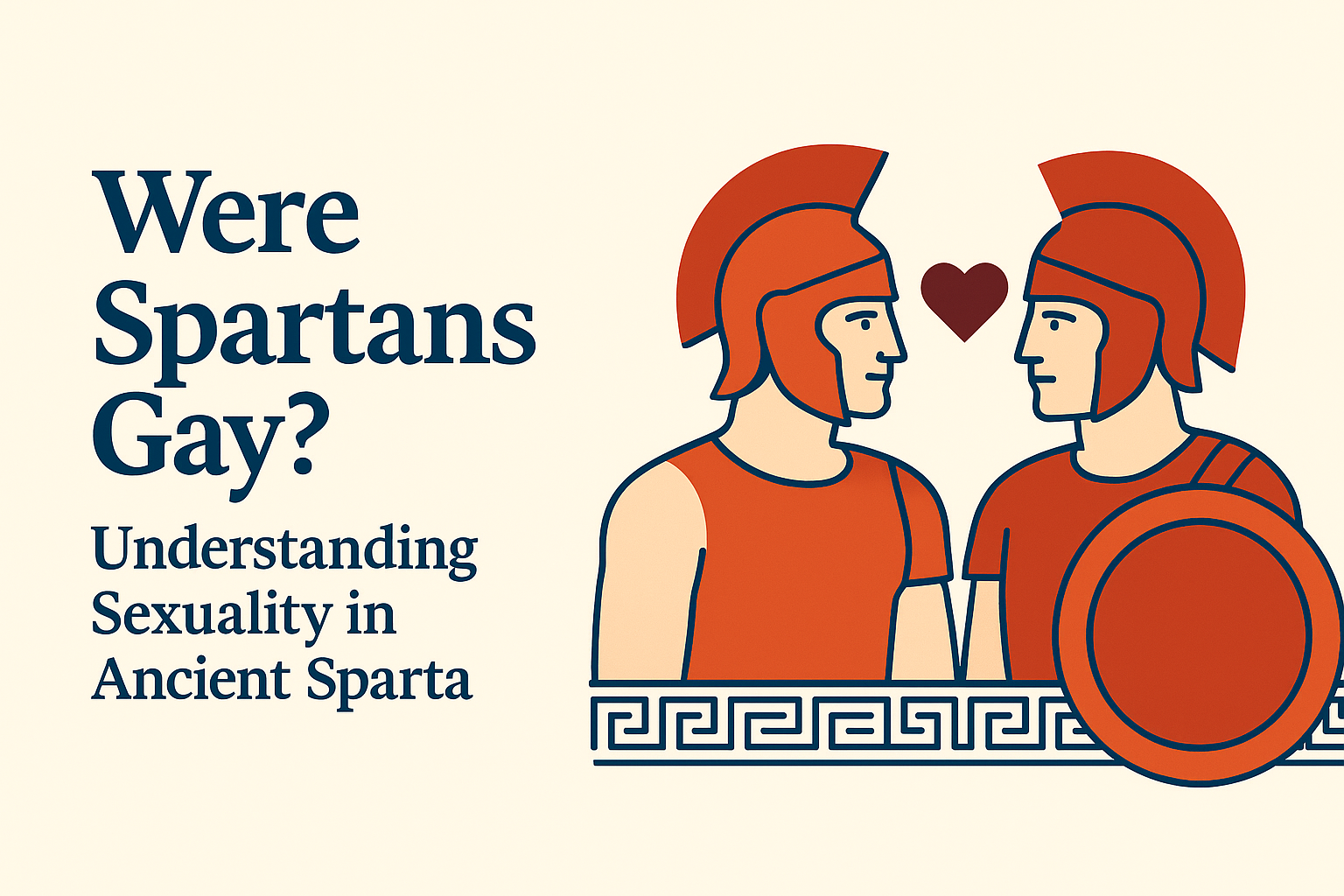
The ancient Spartans have long fascinated historians, not only for their militaristic culture and strict discipline but also for their unique views on relationships, including sexuality. A common modern question is: “Were Spartans gay?” The answer, however, is more nuanced than a simple yes or no. To understand Spartan sexuality, we must examine their social structures, cultural norms, and the context of ancient Greece.
Sexual Norms in Ancient Greece
Before diving into Sparta, it’s essential to understand that homosexual behavior in ancient Greece was neither taboo nor necessarily linked to identity. Instead of defining sexuality in binary terms like “gay” or “straight,” Greeks categorized relationships by roles (active vs. passive) and age (adult vs. youth).
Spartan Society: Structure and Discipline
Sparta was a unique Greek city-state built on discipline, warfare, and communal living. Boys were taken from their families at age 7 to live in military-style barracks, forming intense emotional bonds with their peers and older mentors. This agoge system created the foundation for Spartan brotherhood—and also provides insight into their views on intimacy.
Pederasty in Sparta
Like many Greek city-states, Sparta practiced pederasty—a socially accepted mentorship between an older male (erastes) and a younger boy (eromenos). This relationship often involved intellectual guidance, military training, and emotional support, and sometimes included a sexual component, though sources differ on how frequently this occurred in Sparta compared to Athens.
Emotional Bonds Between Warriors
Spartan warriors trained, lived, and fought side by side for years. Plutarch and Xenophon, two ancient sources, noted the deep affection between Spartan soldiers. Some suggest these bonds were romantic or sexual, believing that love between soldiers strengthened unity on the battlefield.
Marriage and Reproduction in Sparta
Despite same-sex intimacy, Spartans were expected to marry and reproduce. Sparta’s survival depended on maintaining a strong warrior class, so heterosexual marriage was a duty. Men and women often lived separately, with marital relations being more about duty than romance.
Cultural Differences Between Athens and Sparta
In Athens, pederasty was more overt and structured. In contrast, Spartan customs were more militarized and private, making it harder to document or confirm the extent of sexual relationships. Spartans valued discretion, and their sexual culture was less openly discussed in comparison.
Homosexuality vs Homosocial Bonds
Modern labels like “gay” do not accurately apply to ancient Spartans. What we see instead are homosocial environments, where deep bonds could include sexual elements but were not central to one’s identity. A Spartan man could engage in same-sex acts and still fulfill social expectations of marriage and fatherhood.
Views from Historical Sources
- Plutarch described Spartans as encouraging love between male youth and their mentors to foster bravery.
- Xenophon emphasized the role of these bonds in enhancing morale and loyalty among warriors.
- However, not all historians agree—some suggest Spartan same-sex love was more symbolic or restrained.
Homosexual Acts vs Orientation
In Sparta, actions did not define identity. A man might engage in same-sex relations without being labeled or even thinking of himself in terms like “homosexual.” The modern understanding of sexual orientation simply did not exist in their cultural framework.
Modern Misconceptions and Media
Movies like 300 and pop culture often ignore or downplay the complexity of Spartan sexuality. These portrayals focus on machismo and omit the emotional and intimate bonds between soldiers. In doing so, they lose a significant part of what made the Spartan military bond so effective.
Spartan Women and Sexuality
Spartan women were unusually empowered for their time, with more freedom and rights than women in other Greek city-states. While less is known about female-female intimacy, historical silence doesn’t equate to absence. Some scholars suggest that strong female communities in Sparta might have allowed for intimate bonds among women as well.
Military Unity Through Love

The idea that love among soldiers creates stronger military units wasn’t limited to Sparta. The Sacred Band of Thebes, another Greek military unit made up entirely of male couples, exemplifies how emotional bonds were believed to inspire valor and sacrifice.
So… Were Spartans Gay?
In today’s terms, some were, and some weren’t—just like any society. But in Sparta, same-sex relationships were a social function, not a personal identity. Their culture allowed for a range of emotional and physical intimacy among men, particularly within the agoge and the military, without judgment or labels.
What We Can Learn Today
Sparta shows us that human relationships have always been complex. Love, loyalty, and connection aren’t limited by modern labels. The Spartans remind us that emotional bonds can be both powerful and practical, especially when built on mutual respect and purpose.
Conclusion
The question “Were Spartans gay?” reveals more about how we view history through modern lenses than it does about the Spartans themselves. In a culture where strength, loyalty, and unity were everything, same-sex bonds—emotional or physical—were tools of connection, not scandal. They weren’t seen as taboo but as natural outcomes of a life spent in the company of warriors.
So rather than trying to fit Spartans into modern boxes, we can better understand them by accepting that their world was one of fluid roles, intense bonds, and values far different from ours. Their legacy isn’t just about warfare—it’s also about human connection.
FAQs
Did all Spartan men engage in same-sex relationships?
Not necessarily. While it was accepted and sometimes encouraged, participation varied among individuals.
Were same-sex relationships frowned upon in Sparta?
No, they were often considered a way to strengthen military loyalty and were socially accepted.
Did Spartans marry women despite same-sex intimacy?
Yes, heterosexual marriage was mandatory for reproduction and societal stability.
Were Spartan women involved in same-sex relationships?
There’s limited evidence, but their close-knit, empowered social circles may have allowed space for such bonds.
Did Spartans define sexuality like we do today?
No. Modern concepts like “gay” or “straight” didn’t exist. Relationships were seen through roles and social function, not identity.

Understanding AI Agent Architecture: From Automation to Autonomous Intelligence

How DMCA Ignored Hosting Help Adult Content Sites?

Other Alternatives to the Bigbunny Login Casino
Web UI Design Services, Custom Web App Development, or Local Product Design: Where to Start

Type-C to C vs Type A to Type C Cable: What’s the Difference?

How Executive Search Software Selects and Manages Senior Leadership Candidates

Data Science Course in Pune with Placement Support: From Classroom Training to Your First Job

Ethical Hacking Courses in Mumbai with Placement: Institutes, Duration, Fees & Jobs 2026

Best Micro Influencer Agency Singapore: Why Micro Beats Macro for Conversion

What Makes a Crypto Exchange Top-Rated? Understanding the Ranking Criteria
Web UI Design Services, Custom Web App Development, or Local Product Design: Where to Start
How Executive Search Software Selects and Manages Senior Leadership Candidates
Other Alternatives to the Bigbunny Login Casino
Type-C to C vs Type A to Type C Cable: What’s the Difference?
How DMCA Ignored Hosting Help Adult Content Sites?
Understanding AI Agent Architecture: From Automation to Autonomous Intelligence


 Tech2 years ago
How to Use a Temporary Number for WhatsApp
- Business3 years ago
Sepatuindonesia.com | Best Online Store in Indonesia
- Social Media2 years ago
The Best Methods to Download TikTok Videos Using SnapTik
- Technology2 years ago
Top High Paying Affiliate Programs
- Tech2 years ago
Understanding thejavasea.me Leaks Aio-TLP: A Comprehensive Guide
- FOOD2 years ago
How to Identify Pure Desi Ghee? Ultimate Guidelines for Purchasing Authentic Ghee Online

 Instagram4 years ago
Free Instagram Auto Follower Without Login
- Instagram4 years ago
Free Instagram Follower Without Login