
Tech
Understanding RFM & CLV: The Cornerstones of Retention-Led Growth

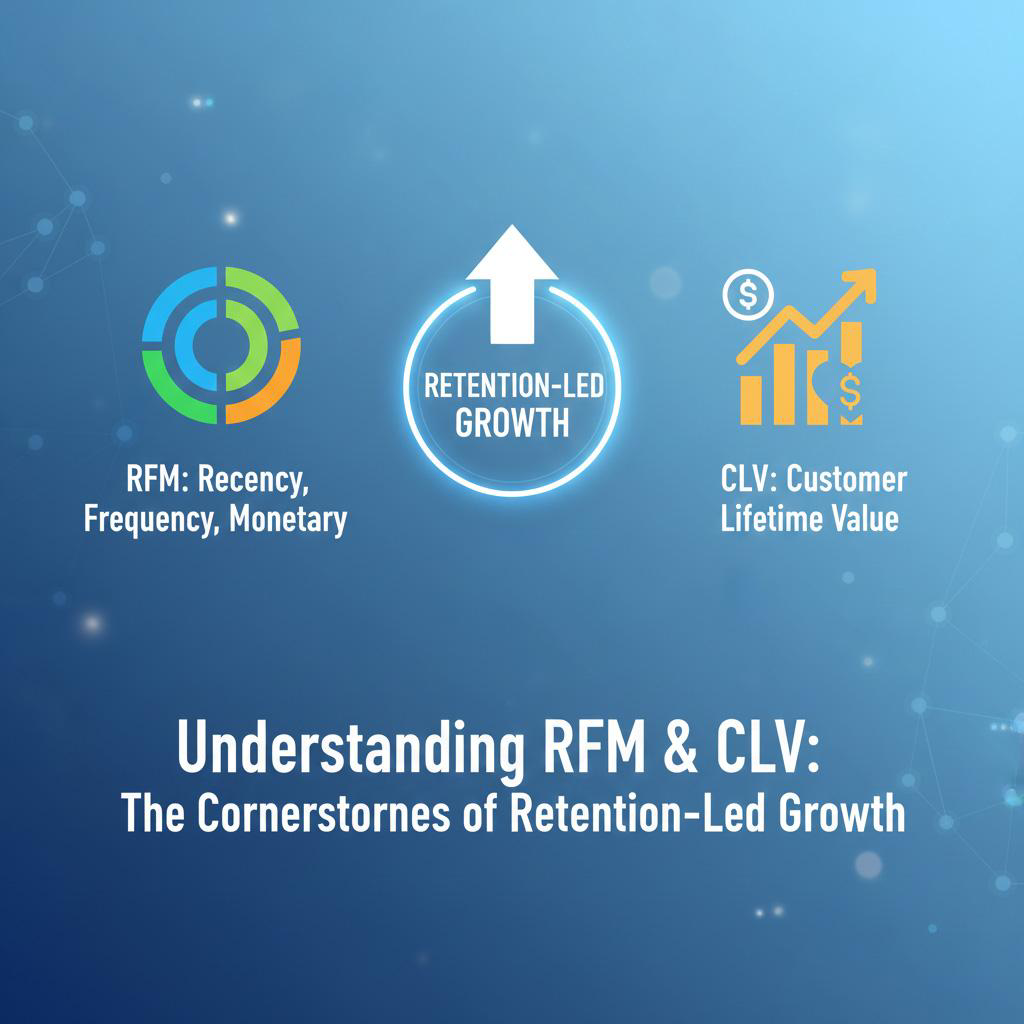
For the past decade, most brands operating in digital commerce have focused heavily on acquisition. Performance media, funnel optimisation, ROAS dashboards and top-of-funnel campaigns became foundational systems for scale. Yet as acquisition costs rise and competitive saturation increases, digital brands in India and global markets are rediscovering the true engine of profitability: retention. This shift is further accelerated by the rise of customer data analytics, now central to modern Technology and Cloud Services ecosystems, which enables brands to understand and influence behaviour with far greater precision.
Retention-first growth is anchored in two analytical models that outperform every other metric when it comes to predicting value: RFM analysis and the CLV model. Together, these frameworks help brands identify their highest-value customers, understand behaviour patterns, and estimate future revenue potential. They also reveal deeper ecommerce performance insights, which many Shopify brands and SEO services agencies now rely on when designing long-term growth and lifecycle strategies.
As digital ecosystems become more complex, RFM and CLV provide clarity. They help brands interpret behaviour-led patterns, prioritise customer segments and design more intelligent retention marketing strategy frameworks. These models act as the analytical spine that connects performance media, lifecycle marketing and data-led decision making across Cloud Services environments. This article explores how these models work, why they matter and how companies can deploy them for sustainable, long-term growth.
Why Retention Matters More Than Ever for Digital Brands
Retention has shifted from a support function to a dominant growth lever. Regardless of category, brands are seeing the same trend: long-term growth comes not from acquiring more customers, but from strengthening the value and frequency of existing ones.
Several market forces have contributed to this shift:
1. Rising acquisition costs
Digital advertising platforms have become more competitive, increasing CPAs across categories.
2. Fragmented attention spans
Consumers engage across marketplaces, D2C stores, social apps and short-form video, requiring stronger recall systems.
3. Data privacy changes
With the decline of third-party cookies, customer segmentation analytics and first-party data are now essential assets.
4. Repeat purchases drive compounding revenue
Returning customers cost significantly less to convert and typically spend more over time.
In this environment, retention is no longer a secondary initiative. It is a structural economic advantage.
RFM Analysis: A Simple Model With Transformative Power
RFM analysis (Recency, Frequency, Monetary Value) is one of the most actionable and predictive customer-segmentation models. It scores customers based on:
- Recency: How recently someone purchased
- Frequency: How often they purchase
- Monetary Value: How much they typically spend
When these signals are mapped, clear behavioural clusters emerge. These clusters reveal loyalty, churn risks, high-value opportunities and dormant segments.
Why RFM Works So Well
RFM is powerful because it converts past behaviour into forward-looking models that predict the likelihood of future purchasing.
But the real strength lies in practical application.
Two simple examples:
- A beauty brand may discover that customers who reorder within 25 days have 40 percent higher lifetime value, enabling more strategic replenishment reminders.
- A snack brand may find that high-frequency weekend buyers respond best to WhatsApp nudges, helping improve repeat rates without heavy discounting.
These insights translate directly into activation.
Before moving into segmentation, brands often see patterns like:
- Champions: High recency, high frequency, high monetary value
- Loyal but low-value: High frequency, low spend
- High potential: High monetary value, low recency
- Dormant: Low across all three dimensions
These micro-segments drive personalised journeys, email flows, loyalty benefits and retention triggers.
CLV Model: The North Star Metric for Long-Term Growth
While RFM describes current behaviour, customer lifetime value (CLV) predicts future value by estimating the total revenue a customer will generate throughout their relationship with the brand.
Why CLV Matters
CLV gives brands strategic clarity across key decisions:
- Budgeting: How much to spend on acquiring similar customers
- Channel strategy: Which acquisition sources deliver high-value customers
- Product strategy: Which items attract long-term buyers
- Retention programmes: Which customers deserve premium engagement
CLV is not just a KPI. It is a lens that shapes how brands think about growth.
How RFM and CLV Work Together
RFM identifies high-value customers today.
CLV identifies high-value customers tomorrow.
Together they:
- Reveal emerging loyalists
- Prioritise high-value segments
- Improve churn prediction
- Enable personalised lifecycle journeys
- Improve revenue forecasting accuracy
This combined approach forms the backbone of any retention-first growth strategy.
How to Turn RFM and CLV Data Into Actionable Segments
Behavioural segmentation only matters when it leads to real action. When activated correctly, RFM and CLV enable:
1. Personalised email and WhatsApp journeys
- Champions receive early access, exclusives and premium engagement
- At-risk users receive urgency-based nudges
- Dormant customers receive reactivation offers
2. Smarter loyalty programmes
High-CLV users enter upper tiers, unlocking differentiated perks.
3. Cross-sell and upsell optimisation
Recommendations align with likely buyer behaviour.
4. Efficient discounting strategies
Only price-sensitive or churn-risk groups receive heavy promotions.
This ensures efficient, ROI-positive lifecycle execution instead of broad, generic messaging.
Why Behavioural Insights Matter for Modern Ecommerce
Today’s ecommerce brands rely heavily on category-level competitiveness, platform performance and user experience. However, the biggest revenue shifts often come from understanding customers at a behavioural level.
This is where behavioral data insights reshape outcomes.
These insights help brands answer questions such as:
- Which customer groups are most profitable?
- Who buys only during sale events?
- Which products trigger repeat purchases?
- What signals predict churn?
- Which user segments respond to content vs discounts vs sampling?
Activation becomes more intelligent when behaviour, not assumptions, drives strategy.
The Role of Customer Data Analytics in Scaling Retention
Advanced customer data analytics systems allow brands to integrate RFM, CLV and broader behavioural signals across channels. These tools support:
- Cohort analysis
- Repeat purchase tracking
- Funnel-wise performance measurement
- Lifetime value forecasting
- Attribution mapping
- Churn modelling
Analytics also enables cross-functional teams to align. Marketing, product, merchandising and operations can all view retention priorities through shared data.
This capability is especially critical for omnichannel and D2C brands competing against marketplaces, aggregators and quick-commerce platforms.
The Future of Retention: AI-Driven Personalisation
AI has accelerated the evolution of retention systems in ways that were not possible even a few years ago. While RFM analysis and the CLV model act as the foundational frameworks, AI strengthens them through automation, predictive intelligence and the ability to personalise journeys at scale. Modern AI engines continuously analyse patterns such as replenishment frequency, browsing signals, discount sensitivity, churn probability and preferred communication channels.
AI supports retention through:
- Real-time segment updates
- Predictive churn scoring
- Personalised content generation
- Dynamic pricing and discounts
- Intelligent replenishment reminders
- Automated journey orchestration
- Cross-channel message sequencing
Beyond automation, AI enables deeper behavioural understanding. For example, replenishable categories such as beauty or wellness can deploy predictive replenishment flows that trigger communication before the customer runs out. Subscription brands can use AI-scored churn markers to push retention offers at the right moment instead of reacting after the customer leaves. Fashion brands can deploy AI-driven product recommendations that adapt based on style affinity, category depth and micro trends.
AI also enhances customer lifetime value forecasting. Instead of static projections, AI produces rolling lifetime value predictions that update continuously as customer behaviour shifts. This allows brands to adjust acquisition budgets, reduce overspending on low-value segments and protect high-value cohorts with greater accuracy.
With these capabilities, brands can scale emotional, contextual and personalised journeys without increasing manual workload. This is why retention-led growth is becoming more achievable for mid-sized companies operating across competitive ecommerce categories.
How RFM and CLV Guide Retention-Led Growth Strategies
Retention-first growth prioritises sustainable revenue rather than one-time spikes. RFM analysis and the CLV model give brands the tools to design lifecycle journeys that increase long-term value while controlling acquisition costs. These models allow teams to understand not only who the high-value customers are, but also why they behave the way they do and what interventions will extend their relationship.
Brands use RFM and CLV to build:
- Data-driven lifecycle journeys
- Category-wise retention mapping
- High-value customer protection strategies
- Churn prevention workflows
- Long-term affinity pathways
The application differs by category. Beauty brands can use RFM to identify replenishment cycles and push routine-based journeys. FMCG brands often rely on frequency signals to design sampling, bundling and subscription programmes. Fashion brands use recency and preference clustering to design personalised lookbooks and automated restock alerts. For high involvement categories such as electronics, CLV helps determine warranty-led nurturing and post-purchase education flows.
Retention-first strategies also contribute to CAC efficiency. When customer lifetime value increases through consistent repeat behaviour, brands can reinvest part of that improved margin into more aggressive acquisition channels without compromising profitability. Over time, this creates a compounding growth cycle where retention improves CAC and CAC fuels retention.
This mindset strengthens the relationship between brand and customer, creating a revenue engine that remains stable across seasons and competitive shifts.
The Role of Strategic Partners in Implementing These Models
Many businesses understand RFM analysis and the CLV model conceptually but struggle with implementation. Operationalising these models requires clean data, unified tracking, cross-platform integrations, behaviour-led creative flows and continuous optimisation. Most brands lack the analytical depth or lifecycle automation capabilities needed to activate these frameworks at scale.
This is where specialist partners such as Lyxel&Flamingo help build the right strategic and operational systems. Their expertise spans ecommerce ecosystems, lifecycle automation, analytical modelling and retention orchestration. This includes setting up CLV-driven dashboards, integrating data from marketplaces and D2C platforms, implementing automated lifecycle journeys and aligning cross-functional teams around shared retention marketing strategy priorities.
Lyxel&Flamingo, a performance-driven digital marketing agency, also supports brands in creating behaviour-specific creative assets, building predictive churn workflows, and deploying advanced customer segmentation analytics that tie directly to revenue. Their work enables businesses to convert behavioral data insights into measurable improvements across retention rate, repeat purchase frequency, average order value, and customer lifetime value.
With the right strategic partner in place, brands can move from theoretical understanding to full-scale execution, unlocking the true economic power of retention-led growth.
Conclusion
Retention is becoming the strongest driver of sustainable ecommerce performance. RFM analysis, the CLV model, structured customer segmentation analytics and deeper behavioural intelligence give brands the clarity they need to design journeys that strengthen loyalty and increase long-term value.
Combined with strong customer data analytics systems and refined ecommerce performance insights built across Shopify and SEO environments, these models transform unstructured behavioural data into durable revenue.
Brands often rely on expert partners like Lyxel&Flamingo to operationalise these models, integrating analytics, lifecycle design and retention systems with greater precision.
In a digital world where loyalty defines profitability, mastering RFM and CLV is no longer optional. It is the difference between inconsistent growth and continuously compounding performance.


Yuppow.con: What You Should Know Before Visiting

Moviws2watch: What You Should Know First

Methstreamz: What to Know Before Streaming

Lekulent: What It Means and Why People Are Curious

Hdtodat: Meaning, Uses, and Practical Value Today

Eroaberry: What It Is and What Users Should Know

Allgames365: A Complete Look at the Platform Experience

Why Choosing a Professional Noida Digital Marketing Agency Matters in 2026

vmovee: What to Know Before You Stream

rarbgget.org: What Users Should Know Today

dikganes Explained: Meaning, Usage, and Digital Significance

FilmyzillaHD Explained: Movies, Risks, Legality, and Facts

Freemasx – A Complete Guide to Understanding the Platform

Epirnet: Transforming Digital Connectivity Today

Thithub: A Deep Dive Into the Platform’s Real Value

Dedicated Server Hosting Provider: What to Look For

Navigating the Future of High-Performance Streaming: The Search for a New Standard

taktubr Explained: Meaning, Usage, and Digital Significance

iPhone 15 Cover: What Makes One Worth Buying and Another a Waste of Money

Pinaflux: A Comprehensive Guide to the Rising Digital Innovation
Yuppow.con: What You Should Know Before Visiting
Moviws2watch: What You Should Know First
Methstreamz: What to Know Before Streaming

How to Use a Temporary Number for WhatsApp

Sepatuindonesia.com | Best Online Store in Indonesia

The Best Methods to Download TikTok Videos Using SnapTik
-
 Tech1 year ago
How to Use a Temporary Number for WhatsApp
-
 Business2 years ago
Sepatuindonesia.com | Best Online Store in Indonesia
-
 Social Media2 years ago
The Best Methods to Download TikTok Videos Using SnapTik
-

 Technology2 years ago
Top High Paying Affiliate Programs
-

 Tech1 year ago
Understanding thejavasea.me Leaks Aio-TLP: A Comprehensive Guide
-

 FOOD1 year ago
How to Identify Pure Desi Ghee? Ultimate Guidelines for Purchasing Authentic Ghee Online
-
 Instagram3 years ago
Free Instagram Auto Follower Without Login
-
 Instagram3 years ago
Free Instagram Follower Without Login