
Business
Self-Thread Screws: Powering the Manufacturing Industry

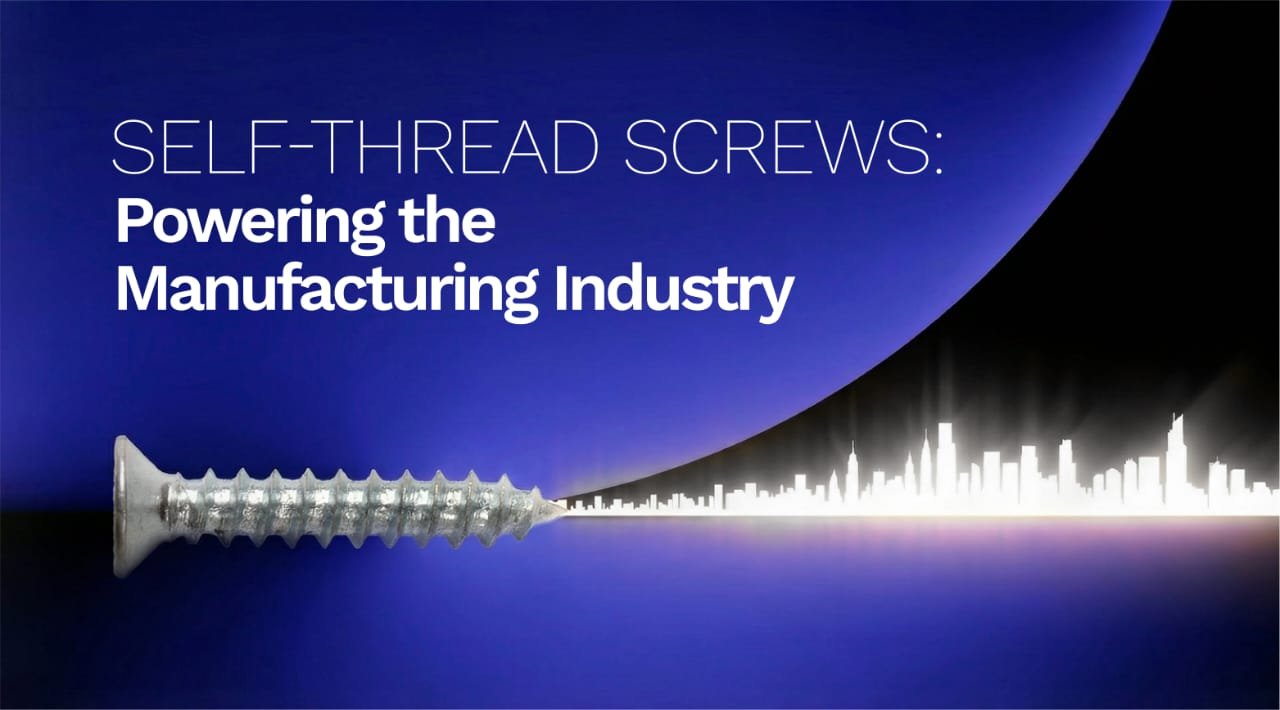
Self-thread screw decisions rarely make it into boardroom discussions, but they shape what actually happens on the factory floor every single day.
Modern manufacturing struggles when processes carry steps that no longer justify their existence. A few extra seconds here, one additional operation there, multiplied across thousands of units lead to delays, costs and inconsistencies. This is why fastening has changed over the years. In high-volume environments, fastening is no longer a minor task done at the end of assembly. It sits right inside the production rhythm, affecting cycle time, manpower planning, error rates.
Manufacturers today look for systems that reduce dependency, simplify movement and behave predictably shift after shift. The fewer decisions an operator has to make, the smoother the line runs. This article looks at a self-thread screw as an enabler of modern manufacturing systems. The focus is not on what they are, but on why so many factories have come to depend on them without much discussion at all. If manufacturing today feels faster, more consistent and more repeatable than it did years ago, fastening choices are part of that story, even if they rarely get the credit.
When Fastening Becomes a Bottleneck on the Factory Floor
In a factory, problems show up in the form of small delays that repeat. Fastening is one of those areas. On paper, drilling, tapping and fastening look like minor steps. However, on a live production line, they add up quickly. Each extra operation means more time, more tools and more chances for variation. When volumes increase, these small inefficiencies add up. Operators are compelled to slow down to align tools. Rework becomes part of the routine instead of an exception. Manufacturing teams don’t usually label this as a ‘fastener problem’. They experience it as:
- Slower cycle times
- Uneven output between shifts
- Increased dependency on skilled operators
- Higher scrap and rework rates
So the question is how we can ensure working with fewer interruptions. This is where fastening becomes part of process design. Reducing steps means removing friction from a system that needs to run smoothly, hour after hour.
Why Manufacturing Thinks in ‘One-Step Systems’
Manufacturing has slowly moved away from complexity, even when that complexity once felt necessary. Unlike workshop discussions around wood screw vs. self-thread screw, manufacturing decisions are driven less by preference and more by repeatability, speed and process stability. Every additional step in a process brings with it a new dependency. A new tool. A new judgement call. A new opportunity for variation. Over time, these add up as friction across the entire line.
This is why factories increasingly design around one-step systems, because they are easier to control. As drilling, tapping and fastening are separate actions, the outcomes depend upon the skill of the operator. When these steps add up, the process becomes even more repeatable. When there are fewer handoffs, the chance for misalignment or error reduce significantly. That’s why self-thread screw are a natural choice for modern manufacturing systems. It removes intermediate decisions from the line. Manufacturing systems are built to scale. One-step fastening supports that goal by reducing the number of variables that need constant attention. The result is steadier output, easier training and fewer surprises when volumes rise.
What Self-Thread Screws Actually Enable at Scale
At scale, manufacturing is improved by small decisions that behave well when repeated thousands of times. This is where a self-thread screw earns its place. Not because it is faster in isolation, but because it removes uncertainty from the fastening stage. When a screw forms its own thread, you start seeing the same result again and again. The fit adjusts naturally to the material, reducing dependence on perfectly prepared holes. This matters when tolerances vary slightly from batch to batch, as they often do in real production.
Another advantage shows up in labour management. Lines become easier to staff and easier to train for. Operators don’t need deep judgement for each fastening point. The process guides itself.
Over time, this consistency affects more than speed:
- Fewer stripped threads
- Less rework
- More uniform torque response
- Better vibration resistance in assembled parts
In manufacturing, reliability compounds. When fastening behaves predictably, downstream processes become easier to control. Assemblies move forward without hesitation and quality checks focus on fewer variables.
That is the real contribution of self-threading systems as they stabilise the process.
Where Manufacturing Relies on Self-Thread Screws
Self-thread screws dominate manufacturing because the same conditions repeat across industries. When you look closely you will find that the patterns are familiar. Many assemblies involve thin materials that don’t justify deep tapping. Others face constant vibration, where joints must hold without loosening over time. Some lines deal with slight variations in thickness or alignment, especially when production runs are long and materials come from multiple sources. In these situations, fastening needs to adapt quietly without demanding attention.
That’s why self-threading fasteners are a great choice for automotive panels, appliance housings, HVAC ducting, electrical enclosures and metal frameworks. While the application may change, the requirement stays the same giving consistent results with minimal intervention. Factories choose them because they behave well under repetition. When a fastening method works the same way on the first unit and the thousandth earning the trust.
This is also why these screws are rarely discussed once adopted. They become part of the background, noticed only when they’re missing.
Consistency Matters More Than Strength in Industrial Fastening
In manufacturing, strength isn’t the main problem but the variation is. A screw that is extremely strong but behaves differently from unit to unit creates more trouble than a slightly less aggressive fastener that performs the same way every time. On a production line, fastening is judged by how predictably it behaves across thousands of cycles, its torque response, thread formation and seating depth. These small details matter more than headline strength figures.
Self-threading fasteners are valued because they reduce spread. The threads form in response to the material, not in spite of it. This leads to more uniform joints, especially when material thickness or hardness varies slightly across batches.
Consistency also protects downstream processes. When fastening behaves reliably, inspection becomes simpler. Assemblies don’t need corrective handling. Vibration performance stays stable in the field.
Quality, Standards and the Indian Manufacturing Context
As manufacturing in India scales, fastening decisions are driven by quality systems, audits and long-term supply commitments. Once products start moving across regions or going out for export, consistency stops being a nice-to-have. It becomes essential. A fastener that behaves one way in one batch and slightly differently in the next creates doubts on the shop floor and manufacturing teams don’t have room for that kind of uncertainty. This is usually when standards, checks and process discipline start to matter more than individual specs on paper. Things like thread shape, hardness and coating quality need to stay predictable run after run.
Because of this, an SS Screws manufacturer in India is often judged less by claims and more by repeatability. Teams look for suppliers who understand scale and pressure, not just fasteners. Established players like LP Screw have had to learn this the hard way, by supplying into high-volume, quality-sensitive environments over time. As Indian manufacturing plugs deeper into global supply chains, the expectation is simple: fastening should work quietly, the same way every time, without needing constant attention.
Why Self-Thread Screws Quietly Keep Manufacturing Moving
Manufacturing systems don’t reward complexity. They reward flow. Over time, factories evolve toward processes that remove hesitation, reduce dependency and behave predictably under pressure. Fastening is part of that evolution. Self-threading systems became common because they fit how modern manufacturing actually works. They remove steps that slow lines down. They reduce variation that leads to rework. They allow processes to scale without demanding constant adjustment.
A self-thread screw rarely draws attention once it’s chosen. And that’s precisely the point. In manufacturing, the best components are often the ones that disappear into the system, doing their job without needing discussion. When production moves smoothly, issues reduce and output stays consistent, fastening decisions have already done their work quietly, in the background, where manufacturing prefers them to be.


Yuppow.con: What You Should Know Before Visiting

Moviws2watch: What You Should Know First

Methstreamz: What to Know Before Streaming

Lekulent: What It Means and Why People Are Curious

Hdtodat: Meaning, Uses, and Practical Value Today

Eroaberry: What It Is and What Users Should Know

Allgames365: A Complete Look at the Platform Experience

Why Choosing a Professional Noida Digital Marketing Agency Matters in 2026

vmovee: What to Know Before You Stream

rarbgget.org: What Users Should Know Today

dikganes Explained: Meaning, Usage, and Digital Significance

FilmyzillaHD Explained: Movies, Risks, Legality, and Facts

Freemasx – A Complete Guide to Understanding the Platform

Epirnet: Transforming Digital Connectivity Today

Thithub: A Deep Dive Into the Platform’s Real Value

Dedicated Server Hosting Provider: What to Look For

taktubr Explained: Meaning, Usage, and Digital Significance

Navigating the Future of High-Performance Streaming: The Search for a New Standard

iPhone 15 Cover: What Makes One Worth Buying and Another a Waste of Money

Pinaflux: A Comprehensive Guide to the Rising Digital Innovation
Yuppow.con: What You Should Know Before Visiting
Moviws2watch: What You Should Know First
Methstreamz: What to Know Before Streaming

How to Use a Temporary Number for WhatsApp

Sepatuindonesia.com | Best Online Store in Indonesia

The Best Methods to Download TikTok Videos Using SnapTik
-
 Tech1 year ago
How to Use a Temporary Number for WhatsApp
-
 Business2 years ago
Sepatuindonesia.com | Best Online Store in Indonesia
-
 Social Media2 years ago
The Best Methods to Download TikTok Videos Using SnapTik
-

 Technology2 years ago
Top High Paying Affiliate Programs
-

 Tech1 year ago
Understanding thejavasea.me Leaks Aio-TLP: A Comprehensive Guide
-

 FOOD1 year ago
How to Identify Pure Desi Ghee? Ultimate Guidelines for Purchasing Authentic Ghee Online
-
 Instagram3 years ago
Free Instagram Auto Follower Without Login
-
 Instagram3 years ago
Free Instagram Follower Without Login