
Blog
Realistic Sketch Drawing: Unlocking the Power of Pencil and Observation

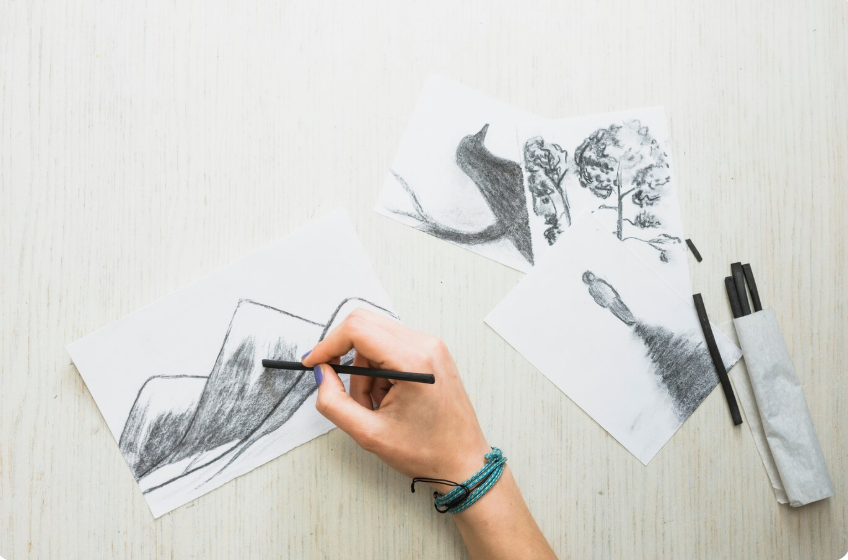
The art of realistic sketch drawing lies in capturing the world as we see it, bringing a blank page to life with just a pencil and careful observation. Whether you’re sketching a portrait, a landscape, or a still-life arrangement, realistic drawing requires patience, practice, and a deep understanding of light, shadow, and form. Many beginners admire hyper-realistic drawings and wonder how they too can master this skill. The good news is that realistic sketching isn’t magic — it’s a craft that can be learned and refined over time. This article explores the techniques, tools, and mindset you need to create realistic drawings that truly captivate.
What Makes a Drawing Realistic?
When people talk about a drawing being “realistic,” they mean that it closely matches the appearance of its subject. Every tiny detail — from the curve of a face to the way light reflects off a glass — must look like it could exist in the real world. Realistic drawings require an understanding of shapes, proportions, and shading. Beyond simple outlines, a successful realistic sketch contains depth and texture, making the viewer feel as if they could touch what they see. Achieving this level of realism takes careful observation and a willingness to practice seeing the world as it truly is — full of subtle gradients and imperfections.
The Importance of Observation
Every realistic drawing begins with careful observation. Drawing is not about what you think an object looks like — it’s about drawing what you see. For instance, when sketching a glass of water, don’t just draw a generic glass shape; look closely at the highlights, the reflection, the shadows created by the curved surface. Train yourself to notice these subtle differences. This skill, sometimes called “drawing what you see,” separates realistic artists from those who draw purely from memory. A strong power of observation also means breaking down a subject into simple shapes — circles, ovals, triangles — then refining those shapes into more complex forms.
Choosing the Right Materials
Although realistic drawings can be created with a simple pencil and sheet of paper, choosing quality materials can elevate your work. Graphite pencils of varying grades — from hard H pencils to soft B pencils — allow you to produce fine light lines as well as rich dark tones. Many artists also use a kneaded eraser to gently lift off graphite and create realistic highlights. Blending stumps and tissues help achieve smooth gradients without harsh lines. Acid-free, smooth-surface paper is also important; its fine texture is ideal for capturing fine detail. Investing in proper materials may seem like a small thing, but it will give you more control and better results.
Understanding Light and Shadow
The key to realism lies in mastering light and shadow. In any realistic drawing, shading is what gives a flat image its depth and dimension. Shadows ground an object, making it feel solid, while light adds softness and realism. One of the most effective techniques for capturing light and shadow is known as value shading — applying different pressure with your pencil to produce a smooth gradient from dark to light. Artists often look for where the light source is coming from and carefully map the darkest shadows, midtones, and lightest highlights. Even a simple sphere can look like a real, three-dimensional ball if shaded with careful attention.
Adding Texture and Detail
Once you’ve established the basic shapes and shading, you can add realistic textures to your drawings. Texture is what makes a surface feel like wood, metal, skin, or fabric. Pay attention to small surface details — like the grain of wood, the fine pores of skin, or the pattern of fabric — and depict them with fine pencil strokes or subtle shading. Patience is critical at this stage; sometimes drawing realistic texture can take much longer than sketching the basic shapes. However, it’s this level of detail that transforms an average drawing into a compelling, photorealistic image.
Practicing Facial Features
Portraits are one of the most popular — and most challenging — subjects for realistic drawing. Getting a face to look like the person you’re drawing requires careful attention to the shapes and placement of the eyes, nose, mouth, and ears. Break down each feature into simple shapes first. For example, an eye can be thought of as an almond shape with a circle for the iris and a curved shadow for the eyelid. Study references closely to see how light and shadow define these features — eyelashes catch light, lips often have a subtle highlight along their center, and ears are a maze of subtle contours. Practicing one feature at a time can help you improve your skill before moving on to full portraits.
Capturing Perspective and Proportion
Realistic drawings look wrong if they don’t follow correct proportions and perspective. Perspective ensures that all elements of a scene recede into the distance at the proper angles, creating the illusion of depth. Proportion, on the other hand, refers to the relative size of one part of an object or scene compared to another — for example, making sure the nose on a portrait is correctly sized relative to the eyes and mouth. Beginners can improve their sense of proportion by using light guidelines or a grid method, which divides the image into sections so they can draw one part at a time. Consistent practice with these techniques builds a strong foundation for more complex drawings.
The Role of Patience
Creating a realistic sketch is rarely quick. It often requires many hours of focused, careful work. Unlike quick sketches or doodles, realistic drawings involve layering one detail on top of another, gradually building up depth and complexity. It’s easy to feel frustrated or impatient — especially when progress feels slow — but this is part of the process. Many experienced artists recommend working on a drawing in multiple short sessions rather than trying to finish in one sitting. This way, you can come back with fresh eyes, catch mistakes, and refine small areas you might have overlooked before.
Practicing with References
One of the most effective ways to improve realistic drawing is to practice with references — photographs, still-life setups, or even real-life models. Drawing from life, whether it’s a bowl of fruit or a model sitting for a portrait, trains your eye to see what’s truly there. Photographs also offer the advantage of staying perfectly still, allowing you to take your time to capture every tiny detail. Many professional artists keep a personal library of photo references so they always have something inspiring and challenging to draw.
Going Beyond Pencil

Although pencil is the most common tool for realistic drawings, many artists also explore other mediums. Charcoal, for instance, is wonderful for creating rich, velvety darks and expressive lines, while colored pencils allow for the realistic rendering of color and light. Ink pens can add fine, sharp details, and watercolor paints can enhance drawings with subtle washes of color. Combining different mediums — for example, drawing a detailed portrait with graphite and then lightly tinting it with watercolor — can add richness and personality to a piece.
Learning From Others
Artists throughout history have shared their techniques and processes, and modern artists continue this tradition through online tutorials, workshops, and courses. Studying the work of masters — whether it’s Renaissance draftsmen like Leonardo da Vinci or hyper-realist contemporary artists — can help you understand new techniques and inspire your practice. Joining a local art group or sharing your drawings online for feedback can also encourage you to grow. Remember that every artist was once a beginner, and making mistakes is part of the learning process.
Conclusion
Realistic sketch drawing is a journey of observation, patience, and practice. By carefully studying light, shadow, proportion, and detail — and by choosing the right tools and reference materials — anyone can improve their skill. Realism is not an impossible art; it’s a skill that grows the more you draw. Every sketch is a step toward seeing the world more clearly and capturing its beauty on paper. So, pick up your pencil, embrace the process, and let your drawings reveal the world as you see it.


Getting Started with Email Marketing Tools for Small Businesses!

Tennis Betting Tips For Beginners: How To Start Betting Smart

Wanda Hutchins: Life, Family, and Quiet Strength

Toriah Lachell: Career, Life, and Public Spotlight

Rishia Haas: A Private Life Beyond the Spotlight

MyKaty Guide for Residents and Newcomers

Micky Popovich: Background and Public Interest

Debra Lee Blocker: Life, Identity, and Public Curiosity

Boogie Tillmon: Life, Family, and Public Story

Culinary Degree: Pathways to a Career in the Culinary Arts

dikganes Explained: Meaning, Usage, and Digital Significance

FilmyzillaHD Explained: Movies, Risks, Legality, and Facts

Epirnet: Transforming Digital Connectivity Today

Jememintre: Meaning, Uses, and Real-World Relevance

Thithub: A Deep Dive Into the Platform’s Real Value

Freemasx – A Complete Guide to Understanding the Platform

Xfrencies: Meaning, Usage, and Digital Relevance

Dedicated Server Hosting Provider: What to Look For

Navigating the Future of High-Performance Streaming: The Search for a New Standard

taktubr Explained: Meaning, Usage, and Digital Significance
Getting Started with Email Marketing Tools for Small Businesses!
Tennis Betting Tips For Beginners: How To Start Betting Smart
Wanda Hutchins: Life, Family, and Quiet Strength

How to Use a Temporary Number for WhatsApp

Sepatuindonesia.com | Best Online Store in Indonesia

The Best Methods to Download TikTok Videos Using SnapTik
-
 Tech1 year ago
How to Use a Temporary Number for WhatsApp
-
 Business2 years ago
Sepatuindonesia.com | Best Online Store in Indonesia
-
 Social Media2 years ago
The Best Methods to Download TikTok Videos Using SnapTik
-

 Technology2 years ago
Top High Paying Affiliate Programs
-

 Tech12 months ago
Understanding thejavasea.me Leaks Aio-TLP: A Comprehensive Guide
-

 FOOD1 year ago
How to Identify Pure Desi Ghee? Ultimate Guidelines for Purchasing Authentic Ghee Online
-
 Instagram3 years ago
Free Instagram Auto Follower Without Login
-
 Instagram3 years ago
Free Instagram Follower Without Login