
Tech
The Data Pipeline Journey: From Raw Data to Actionable Insights

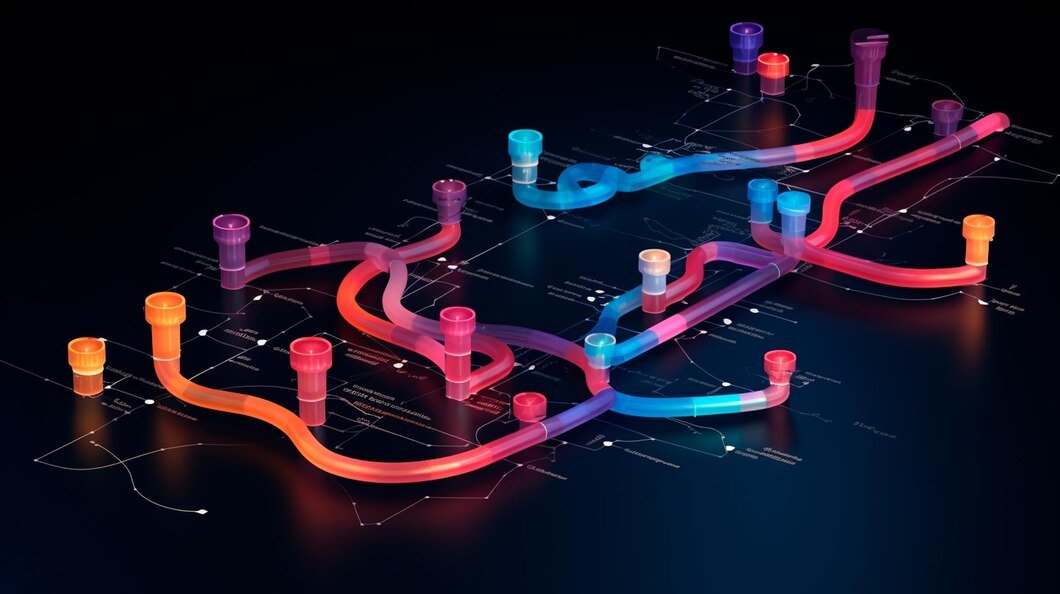
In today’s data-driven world, organizations rely heavily on data pipelines to transform raw data into meaningful, actionable insights. A data pipeline is a series of processes that move data from its source to storage and eventually to analysis or reporting systems. This journey is essential in helping businesses make informed decisions based on reliable, high-quality data. In this article, we’ll explore the stages of a data pipeline, its importance, and how to optimize it for business success.
What is a Data Pipeline?
At its core, a data pipeline is a set of automated processes that allow data to flow from one system to another, often through multiple stages of transformation and validation. The pipeline ensures that data is collected, processed, cleaned, and delivered in a format that is ready for use by business analysts, data scientists, or machine learning models. These pipelines are critical for managing the increasingly large and complex datasets that organizations collect.
Stages of the Data Pipeline Journey
1. Data Collection
The first step in any data pipeline journey is the collection of data from various sources. These sources can include internal systems, third-party APIs, sensors, databases, or cloud storage services. Data may come in various formats, including structured (e.g., SQL databases), semi-structured (e.g., JSON, XML), or unstructured (e.g., text files, images, or videos).
During this stage, it’s crucial to ensure that the data being collected is relevant, accurate, and timely. With the increase in data sources, organizations often use real-time data streaming techniques to collect information continuously.
2. Data Ingestion
Once the data is collected, it needs to be ingested into a centralized system or database for processing. Data ingestion can be batch-based (where data is collected in intervals) or real-time (where data is continuously streamed). Depending on the volume, velocity, and variety of data, different ingestion tools like Apache Kafka, Apache NiFi, or cloud-based services like AWS Kinesis may be used.
In this stage, it’s essential to ensure that the ingestion process does not result in data loss or corruption, especially when dealing with large amounts of data.
3. Data Cleaning and Transformation
Raw data is often messy, incomplete, or in a format that is not useful for analysis. The data cleaning and transformation process ensures that the data is accurate, consistent, and formatted correctly for further analysis. This can include:
- Data Cleansing: Removing duplicates, fixing errors, and handling missing values.
- Data Transformation: Converting data into a standard format, such as aggregating data, applying calculations, or changing units of measurement.
- Data Validation: Verifying that the data meets quality standards before it is moved forward in the pipeline.
Data transformation often occurs in stages. Tools such as Apache Spark, AWS Glue, and Talend are commonly used to perform these transformations at scale.
4. Data Storage
Once cleaned and transformed, the data needs to be stored in a place that is secure, easily accessible, and scalable. Organizations can use a variety of storage solutions depending on their needs, including:
- Data Lakes: Suitable for storing raw and unstructured data. Often used for big data analytics.
- Data Warehouses: Structured storage systems for processed and cleaned data, often used for business intelligence (BI) purposes.
- Cloud Storage: Popular for its scalability and ease of integration with other cloud-based services.
The storage stage must ensure that data is organized in a way that allows easy retrieval and analysis. Optimized data storage is key to minimizing access times and improving overall pipeline performance.
5. Data Analysis
After storage, the data is ready for analysis. This stage involves applying statistical models, data mining techniques, and machine learning algorithms to derive insights and predictions from the data. The analysis can be carried out using tools such as:
- BI Tools like Tableau, Power BI, or Looker for dashboards and reporting.
- Data Science Tools like Python, R, or Jupyter notebooks for advanced analytics.
- Machine Learning Frameworks like TensorFlow or Scikit-learn for building predictive models.
The goal of this stage is to uncover patterns, trends, or anomalies in the data that can help the organization make informed decisions.
6. Data Visualization and Reporting
The insights derived from the data analysis need to be communicated clearly to stakeholders. Data visualization tools help transform raw analysis into easy-to-understand charts, graphs, and dashboards that can be interpreted by non-technical users. The visualization process plays a vital role in making data actionable.
Good data visualization includes creating intuitive reports and dashboards that show the most important metrics in an accessible format. This helps executives, managers, and analysts understand trends, make decisions, and track business performance in real-time.
7. Data Actionability and Decision-Making
The final stage of the data pipeline is the actionability of the data. At this point, insights derived from the data are used to drive business decisions and strategies. Whether it’s improving customer experience, optimizing supply chain logistics, or targeting marketing efforts, the data informs key decisions.
In some cases, businesses may automate decision-making processes based on the insights derived from the data, especially in real-time systems or predictive models.
The Importance of Data Pipelines
Data pipelines are critical because they provide businesses with the ability to harness the full potential of their data. Without a well-structured pipeline, data can become siloed, inconsistent, or inaccessible. A reliable pipeline ensures that data flows smoothly from collection to analysis, enabling faster decision-making, more accurate insights, and overall better business performance.
Benefits of a Data Pipeline
- Efficiency: Automates repetitive tasks and reduces the time spent on manual data handling.
- Data Integrity: Ensures data is cleaned, validated, and transformed to maintain high-quality standards.
- Scalability: Supports the growing volumes of data businesses generate over time.
- Real-Time Insights: With real-time pipelines, organizations can make decisions based on the most current data available.
- Cost-Effective: Minimizes errors and operational inefficiencies, ultimately saving time and money.
Challenges in the Data Pipeline Journey
Despite their importance, building and maintaining data pipelines comes with its own set of challenges:
- Data Quality: Ensuring data consistency, accuracy, and cleanliness throughout the pipeline can be difficult, especially with large datasets.
- Complexity: Managing multiple data sources, ingestion tools, and transformation steps can become complex, especially as the organization scales.
- Security and Compliance: Data privacy and regulatory concerns, such as GDPR, require strict controls to ensure that sensitive information is protected throughout the pipeline.
- Real-Time Processing: For businesses that require real-time data, latency can become an issue, requiring sophisticated tools to process and deliver data quickly.
Conclusion
The data pipeline journey is a critical component of modern data architecture, helping organizations transform raw data into valuable insights. By understanding and optimizing each stage of the pipeline—from collection to reporting—you can ensure that your business makes informed, data-driven decisions. The journey may come with challenges, but the rewards of a well-oiled data pipeline are well worth the effort.
FAQs
What is the main purpose of a data pipeline?
The main purpose of a data pipeline is to automate the collection, transformation, and analysis of data, ensuring it is accessible and usable for decision-making processes.
What are some popular tools used in data pipelines?
Popular tools include Apache Kafka for data ingestion, Apache Spark for data transformation, and Tableau or Power BI for data visualization.
How can data pipelines be optimized?
Data pipelines can be optimized by improving data cleaning processes, utilizing scalable storage solutions, and implementing automated workflows to reduce bottlenecks and errors.
What challenges can arise when building a data pipeline?
Challenges include data quality issues, managing large volumes of data, ensuring data security, and maintaining low-latency processing for real-time applications.
Why is data cleaning important in a data pipeline?
Data cleaning ensures that the data used for analysis is accurate and reliable, which is essential for producing valid insights and making informed decisions.


TrendyTech’s Data Engineer Training: Build Skills for a Successful Career

Why FastTurnPCBs Matters for High-Frequency PCB Projects

CurlyMe Hair Half Wigs & Crochet Hair For Summer Protective Style
5 Simple CNC Tooling Choices That Improve Shop Efficiency
How Trading Apps Are Shaping the Future of Retail Investing

Migrating from Prometheus to VictoriaMetrics: A Step-by-Step Guide

How Journalists and News Researchers Stay on Top of Multi-Region Coverage in 2026

How Primary 5 Maths Tuition Helps Prevent Careless Math Mistakes
O Level Chemistry Book Excellence: How SAP Helps Students Prepare with Confidence

Low efficiency in small-batch production Smart manufacturing and automation solutions help you cut costs by 30%.
Low efficiency in small-batch production Smart manufacturing and automation solutions help you cut costs by 30%.
O Level Chemistry Book Excellence: How SAP Helps Students Prepare with Confidence
How Journalists and News Researchers Stay on Top of Multi-Region Coverage in 2026
How Primary 5 Maths Tuition Helps Prevent Careless Math Mistakes
5 Simple CNC Tooling Choices That Improve Shop Efficiency
Migrating from Prometheus to VictoriaMetrics: A Step-by-Step Guide
CurlyMe Hair Half Wigs & Crochet Hair For Summer Protective Style
How Trading Apps Are Shaping the Future of Retail Investing
Why FastTurnPCBs Matters for High-Frequency PCB Projects
TrendyTech’s Data Engineer Training: Build Skills for a Successful Career


 Tech2 years ago
How to Use a Temporary Number for WhatsApp
- Business2 years ago
Sepatuindonesia.com | Best Online Store in Indonesia
- Social Media2 years ago
The Best Methods to Download TikTok Videos Using SnapTik
- Technology2 years ago
Top High Paying Affiliate Programs
- Tech1 year ago
Understanding thejavasea.me Leaks Aio-TLP: A Comprehensive Guide
- FOOD2 years ago
How to Identify Pure Desi Ghee? Ultimate Guidelines for Purchasing Authentic Ghee Online

 Instagram4 years ago
Free Instagram Auto Follower Without Login
- Instagram4 years ago
Free Instagram Follower Without Login